NFPA Standards for Commercial Fire Protection
Fire protection is highly regulated and technically complex. Commercial fires cause billions in property damage each year and pose serious risks to life, property, and legal liability. The National Fire Protection Association (NFPA) establishes standards to ensure businesses implement proper systems to prevent these outcomes.
As fire protection technology evolves, so do the NFPA’s requirements. Business owners and facility managers must stay informed and compliant as these changes occur. Read on to learn about the most important NFPA codes for commercial buildings, how each one makes facilities safer, and what can happen if you fall out of compliance.
What is the NFPA?
The NFPA is an international nonprofit founded in 1896. Its goal is to reduce fire and life safety risks through research, education, and code development. The NFPA publishes and regularly updates more than 300 codes and standards. These guide everything from fire alarms and suppression systems to emergency planning and building egress. Authorities having jurisdiction (AHJs) use these codes to design and enforce safer buildings.
Which NFPA codes apply to commercial fire protection?
NFPA commercial fire protection codes are crucial for commercial facilities. Not every code applies to every building, but most fall under several core standards that govern fire alarms, sprinklers, extinguishers, and system maintenance. Compliance depends on factors like building size, occupancy, hazard level, and the systems installed. Here’s a breakdown of some of the most important standards relevant to commercial fire safety and building compliance.
NFPA 10—Standard for Portable Fire Extinguishers
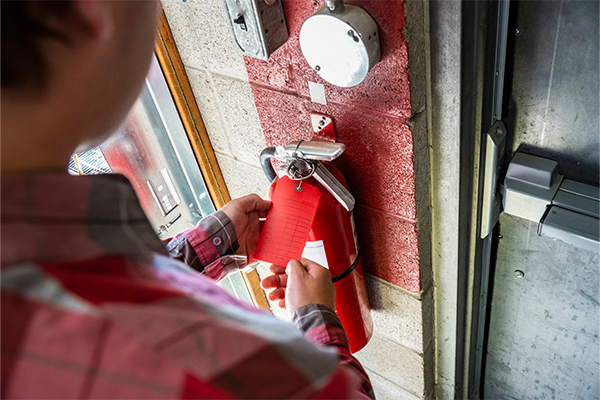
Portable fire extinguishers are a frontline defense against small fires. NFPA 10 requires that they be properly selected, installed, inspected, and maintained. The standard also requires employee training and documentation. Improper placement or outdated equipment often leads to compliance violations. This also means missed chances to put out small fires before they grow.
NFPA 10 outlines requirements for:
- Fire extinguisher categorization for fire classes
- Installation height, placement, and accessibility
- Inspection, testing, and annual maintenance
- Recordkeeping and tagging procedures
- Employee fire extinguisher training
NFPA 13—Standard for the Installation of Sprinkler Systems
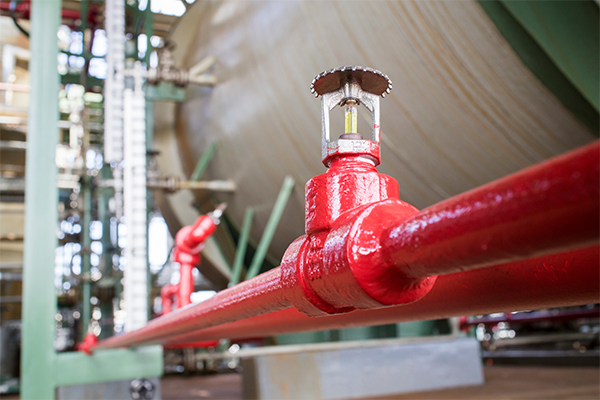
NFPA 13 is the industry standard for commercial fire sprinkler system design. It ensures sprinkler systems work by specifying layout, spacing, water supply, and hydraulics. Sprinklers control fires and often suppress flames before firefighters arrive. NFPA 13 minimizes property loss and protects lives.
NFPA 13 governs requirements such as:
- Types of sprinkler systems (wet, dry, pre-action, deluge)
- System layout, spacing, and obstruction rules
- Hydraulic calculations and water supply requirements
- Sprinkler system components and installation methods
- Standards for special hazard and high-pile storage configurations
NFPA 25—Standard for the Inspection, Testing & Maintenance of Water-Based Fire Protection Systems
NFPA 25 defines the requirements for inspecting, testing, and maintaining fire sprinklers, fire pumps, standpipes, and water tanks. Even a well-designed system can fail if it’s neglected or not tested properly. NFPA 25 helps prevent these failures by setting maintenance intervals and testing methods. AHJs often audit NFPA 25 records as proof that a building’s fire protection systems were maintained correctly.
NFPA 25 sets inspection and maintenance requirements for:
- Sprinklers and sprinkler piping
- Fire pumps and controllers
- Standpipe systems
- Water storage tanks
- Backflow prevention devices
- Valves, flow switches, and tamper switches
NFPA 72—National Fire Alarm and Signaling Code
NFPA 72 is a foundational code for commercial fire protection. It governs the design, installation, monitoring, testing, and maintenance of fire alarm systems. As fire alarm technologies evolve, NFPA 72 is updated regularly to reflect new safety practices and inspection standards. Facilities using fire alarms or emergency communication equipment must follow this code to stay compliant and keep occupants safe.
NFPA 72 covers the following areas:
- System design and equipment requirements
- Fire alarm installation and performance
- Emergency communication and mass notification
- Testing, inspection, and maintenance schedules
- Monitoring and reporting requirements
- Integration with elevators, HVAC, and life safety systems

NFPA 96—Standard for Ventilation Control and Fire Protection of Commercial Cooking Operations
The restaurant industry and other commercial-grade kitchens represent the highest cause of commercial fires due to grease accumulation, high heat, and continuous cooking. NFPA 96 establishes standards for kitchen hood systems, grease exhaust ducts, and cooking-related fire suppression systems. Consistent cleaning and documented maintenance are essential because grease fires can spread rapidly through ductwork, causing catastrophic damage.
NFPA 96 requirements include:
- Hood and duct design and installation
- Grease exhaust ventilation standards
- Cleaning frequency and documentation
- Automatic fire suppression system performance
- Interconnection with gas and electrical shutoff controls
NFPA 101—Life Safety Code
NFPA 101 focuses on protecting building occupants. It establishes rules for safe egress, fire-rated barriers, occupancy classifications, and emergency lighting. Unlike many other NFPA standards, NFPA 101 applies to both new and existing structures. It is widely adopted and often forms the basis for building codes. NFPA 101 is especially important for large facilities with vulnerable populations or tall buildings with high occupancy.
NFPA 101 covers life safety requirements related to:
- Egress routes and exit signage
- Fire-rated walls, doors, and barriers
- Occupancy classifications and load limits
- Emergency lighting and illumination standards
- Protection for high-risk or vulnerable populations
NFPA 2001—Clean Agent Fire Extinguishing Systems
While NFPA 2001 isn’t required for every commercial building, it’s essential for structures with water-sensitive equipment. This code sets design, installation, safety, and maintenance rules, including concentration limits, response times, and safety standards for occupied spaces. These systems are found in data centers, museums, healthcare facilities, and other commercial sites that prioritize fire protection without potential water damage.
NFPA 2001 regulates:
- Approved clean agent types and applications
- System design parameters and discharge calculations
- Safety limits and human exposure guidelines
- Inspection and maintenance requirements
- Enclosure integrity testing (door fan testing)
What are the common NFPA commercial compliance gaps?
Even well-managed facilities can miss key NFPA requirements. These omissions leave them vulnerable to AHJ citations, equipment failure, or liability issues. Many compliance gaps occur because systems weren’t installed to code, weren’t maintained, or aren’t up-to-date with current standards.
Common NFPA compliance gaps include:
- Missed or overdue inspection, testing, and maintenance
- Blocked, painted, or damaged fire sprinkler heads
- Lack of documentation or incomplete service records
- Improper fire extinguisher placement or expired tags
- Disabled fire alarm notification appliances
- Changes in building layout or occupancy, but not system designs
- Inadequate emergency lighting or obstructed egress paths
Are there penalties for failing to comply?
Non-compliance with NFPA standards carries significant consequences for building owners and operators. AHJs, insurance carriers, and fire marshals may impose corrective actions, financial penalties, or even temporary shutdowns. Beyond regulatory consequences, non-compliance increases risks to life, property, and business operations.
Potential penalties for NFPA non-compliance include:
- Fines issued by fire marshals or local authorities
- Required immediate corrections at the building owner’s expense
- Business interruption orders or occupancy restrictions
- Increased insurance premiums or loss of coverage
- Denied insurance claims following a fire event
- Legal liability for injuries or property loss
- Civil lawsuits in cases of negligence
Protect your facility with NFPA-compliant solutions from FSS Technologies
Staying compliant with NFPA standards is an ongoing responsibility, not a one-time project. Building conditions change, equipment ages, and codes evolve, and documentation must be maintained consistently. Partnering with certified fire protection experts ensures every system in your facility meets current NFPA requirements and performs when it matters most.
FSS Technologies delivers fire and life safety services that meet the latest NFPA standards. Our NICET-certified technicians design, install, inspect, test, and maintain systems for all industries. We keep your business protected and compliant year-round. Contact us to schedule a system evaluation or ask about NFPA standards for your building.
Explore Our Other Blogs

7 Tips For Small Business Security
We hope it never happens to you, but workplace crime is something that all business owners should be prepared to encounter. With one-third of our life spent at work, it is an important place to secure and monitor for your safety, and that of your employees. Luckily, there are many simple, proactive steps you can…

What is Video Alarm Verification?
Video alarm verification is a tried-and-true technology that is an underused component in residential and commercial security systems. Video alarm verification adds an extra element to your overall security by partnering your security system with an alarm monitoring center. When an alarm is triggered, video alarm verification allows monitoring center employees to view the situation…

What to Do if Someone Breaks into Your House
Arriving home to find that your home has been burglarized is one of the worst feelings someone can have. You’re left feeling raw, vulnerable, and angry. In this time of high stress, it may be hard to put your thoughts together to remember everything that now needs to be done. We have put together a list…

Ring Doorbell Cons
Video doorbells are a great addition to home security, and Ring is the popular choice for many who prefer wireless security. Although there are some pros to the Ring Doorbell, it has some cons you should be aware of before purchasing from Ring. Monthly Fee for Storage The cheapest Ring doorbell is $59.99, with the…

What to Do After a Break In
No one ever wants to be victimized by a burglar, but the fact is that many will encounter a theft or break-in at some point in their lifetime. A recent study by Bankrate shows that there are over 1 million burglaries in the United States each year, with a new burglary happening approximately every 26…

Items Burglars Want Most
Burglars move quickly. Because they tend to spend as little as ten minutes inside a home or business, several big-ticket items tend to fall prey to thieves. While some items on our list come to mind instantly, some may be more subtle. Outside of installing a security system, taking extra steps to secure your items…

What to Do If a Package Is Stolen
According to a recent study, nearly one in four people report being a victim of package theft and nearly half know someone who has had a package stolen. Of course, the uptick in package theft is not that surprising, considering consumers purchased $2.86 trillion in online retail goods in& 2018. Many of these items land squarely in…

What are the Different Kinds of Security Video Storage?
Security Video Recordings Storage How much storage does a security camera have? It is a seemingly simple question, with a surprisingly complicated answer. Security and surveillance cameras can use a variety of storage types, each with their own advantages and disadvantages. To choose the right security video storage for you, you will need to consider…

Motion Detector Installation Basics
Motion detection devices are a crucial component of any security system, commercial or residential. They allow owners to cover a relatively large amount of space with a small number of devices. Motion detectors also are known to detect activity that window sensors might miss. When it comes time to install motion detection devices, remember these…
Does My Business Need an Access Control System?
Does My Business Need an Access Control System? Before determining whether your business could benefit from an access control system, let’s go over the different types and their capabilities. In short, an access control system is a type of security system that lets you control who, where, and when someone can enter or exit your…