Fire Systems for Commercial Properties
Commercial property management companies have portfolios varying in scale and specialty. Still, they all share the standard responsibility of understanding and implementing fire safety measures for their operations. Fires pose a significant but avoidable threat to your properties, occupants, and sources of revenue. While not all fires can be prevented, some can cause catastrophic damage if your buildings are unprepared.
According to the U.S. Fire Administration (USFA), nearly 130,000 commercial fires led to 140 deaths, 1,300 injuries, and over $3.7 billion in losses in 2022 alone. No matter what industry your properties specialize in, it’s critical to recognize the common causes of commercial fires that can endanger your tenants and their customers. Learn how various codes and fire system elements are vital to implementing fire safety for property managers.
What NFPA codes should I know?
The National Fire Protection Association (NFPA) is a leading organization that established over 300 codes and standards for every aspect of fire safety and prevention. While many NFPA codes apply to commercial fire protection, the most universally relevant and widely used one for any business owner or property manager is NFPA 101, Life Safety Code. Updated every three years, NFPA 101 is unique in its provisions that apply to new and pre-existing structures.
The facilities that are covered in the Life Safety Code include:
- Open structures
- Water-surrounded structures
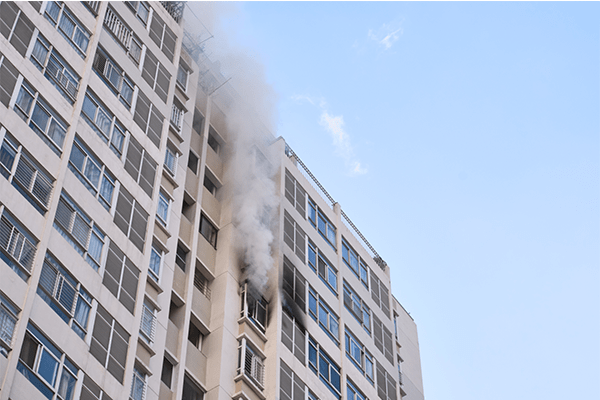
- Towers or multistory buildings
- Animal housing facilities
- Underground structures
- Limited-access facilities
Additionally, some of the properties addressed in NFPA 101 include services like:
- Education
- Daycare
- Healthcare
- Lodging
- Multifamily residences
- Retail
- Industrial
- Office space
- Storage
While specific settings, such as commercial kitchens, have their own fire safety regulations, most business settings must comply with the details of NFPA 101. As a commercial property manager, it’s crucial to understand the various standards and protocols for establishing and maintaining a comprehensive fire safety system. Of the 43 chapters in the Life Safety Code, four are especially helpful.
This NFPA Life Safety Code chapter outlines goals, objectives, equivalent standards, and compliance options for commercial settings. The text explains the intent to create and maintain a high degree of fire safety and prevention using content from NFPA 101 and other more specific codes. It also covers varying fire safety components from a high-level perspective by defining relevant terms referenced throughout this code.
Chapter 7 details specific definitions and requirements for any internal and external access points in a structure, ranging from elevators to refuge areas and typical exits. It covers signage, arrangements, capacity limits, and lighting information to ensure a building’s inhabitants can navigate the layout efficiently during everyday or emergent situations.
This chapter addresses the physical components of a building that play a vital role in promoting life safety by preventing, detecting, and controlling fires. Subsections of Chapter 8 provide information on fire barriers, smoke partitions and barriers, vertical openings, special hazard protection, and door assemblies. Additionally, it covers construction requirements and other NFPA codes that have more specific constraints based on the type of structure.
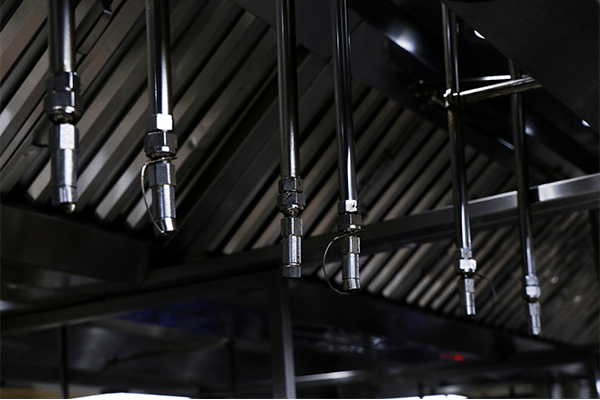
Like other chapters, Chapter 9 of NFPA 101 provides requirements for different fire safety components but concentrates on fire systems for commercial properties. It addresses specifications for system designs, installation, maintenance, and testing requirements for general services like HVAC, utilities, and laundry facilities. It also covers installation, maintenance, and inspection requirements for specific systems like alarms, sprinklers, extinguishers, standpipes, and smoke detectors.
What should a commercial fire system include?
Based on NFPA 101, commercial property managers have many factors to consider when assessing their properties and promoting fire safety for their tenants. Several elements are essential for a comprehensive fire system, whether you manage a multifamily residential building or a multistory business park. Learn about the different parts and the options you can implement for each.
Fire extinguishers are critical fire suppression tools. They allow a property’s inhabitants to put out fires if caught in their early stages. If a fire has grown substantially, fire extinguishers can help people make a safer escape by temporarily keeping the flames from growing. Depending on the fire classes your properties are susceptible to, you must equip your tenants with the appropriate fire extinguishers.
If you own buildings with tenants within the restaurant industry, you’ll likely need to provide Class K fire extinguishers for potential cooking fires. For office buildings and retail structures, extinguishers rated for Classes A, B, and C fires are best. Manufacturers like Kidde often create ABC extinguishers to give people more comprehensive fire coverage. Class D extinguishers are necessary if your properties include manufacturing or industrial businesses.
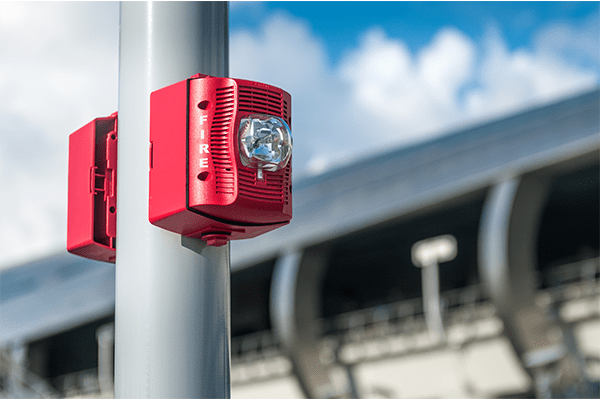
The fire alarms in your properties are an integral part of your fire systems. As a command center for your detection, protection, and suppression systems, your fire alarm system alerts your tenants of potential hazards and helps protect their well-being. Installing and maintaining manual and automatic alarms and smoke detectors is critical to ensuring your fire alarms can detect fires and warn your property’s inhabitants. Alarm pull stations should be placed throughout each building and floor following NFPA 101 and local code requirements. An alarm monitoring service can add extra protection when your property is uninhabited when a fire starts.
While alarm systems involve active fire safety systems, fire protection elements include more passive structures and materials that help contain fires and give your tenants more time to escape. In addition to using materials with the best fire ratings, adding stationary protection elements helps to absorb a fire’s heat and avoid worsening the situation. Components like fire doors, cavity barriers, and firebreaks can protect your property’s tenants and people in surrounding floors or buildings.
Whether your properties are new or older buildings, each must be equipped with a comprehensive fire suppression system that can extinguish fires without causing additional damage. Depending on each property’s characteristics, you can choose between traditional water-based fire sprinklers and suppression systems that use solid or liquid chemicals. While fire sprinklers that use water are more cost-effective, they can lead to more extensive damage if machinery or technology are impacted by water damage.
Keeping your tenants happy and your properties in tip-top shape is integral to the success of any property management company. Just as you can’t take a one-size-fits-all approach to how your properties suit your tenants, there’s no universal fire system for every commercial facility. With FSS Technologies, you get custom-fit commercial fire systems for every property in your portfolio. Our expert service techs are with you every step of the way, from designing and installing your systems to helping you prepare for inspections and code updates. Contact us today to learn how our team can help you protect your properties and tenants.
Explore Our Other Blogs

How Video Doorbells Work
A video doorbell is a system that allows you to see who is ringing your doorbell by way of a video connection. If your video doorbell has a two-way audio system, you also can talk to the person at the front door, whether you’re home or not. How you connect your system and how you…

Will CCTV Work Without Internet?
Closed-circuit television (CCTV) is a TV system where the signal isn’t publicly broadcast but is watched and monitored, usually for surveillance and security purposes. From city streets and highways to retail stores and banks, CCTV cameras are placed in most places to protect property and deter crime. Learn whether a commercial CCTV system can work…
ADT Home Security Settlement
ADT home security is facing a class-action lawsuit. The plaintiffs allege that ADT failed to disclose wireless sensors’ vulnerability to evasion and jamming. Why should you care? Although this settlement is for ADT, this is a vulnerability all wireless security systems face. Let’s talk about wireless technology for a second. All home Wi-Fi networks are…

Alarm Monitoring Services: How They Work
An ear-piercing siren and flashing strobe lights create an immediate sense of emergency and indicate an alarm of some sort has been triggered. Now that the alarm has been triggered and the warning sirens have sounded, what happens next? If you have a monitored security system, it won’t just be the neighbors or passerby alerted to…
ADA Compliance for Fire & Security Systems
The Americans with Disabilities Act (ADA) was created to stop discrimination against and to ensure the rights of people with disabilities. It serves as an equal opportunity law for people with disabilities, defined as “physical or mental impairment that substantively limits one or more major life activities.” For businesses, the ADA means that the services…

Security Camera Resolutions Explained
Different Security Camera Resolutions and Which is Right for You Welcome to the 2020s—it’s finally time to pull the trigger and get a home security camera. Now what? There are a baffling number of cameras and resolutions available on the consumer market, but the math behind figuring out what you want in a security camera…

What are the Different Kinds of Security Video Storage?
Security Video Recordings Storage How much storage does a security camera have? It is a seemingly simple question, with a surprisingly complicated answer. Security and surveillance cameras can use a variety of storage types, each with their own advantages and disadvantages. To choose the right security video storage for you, you will need to consider…

3 Ways to Prevent Shoplifting
Preventing shoplifting is a big deal if you’re a retailer. According to the 2018 National Retail Security Survey, shoplifting continues to be the leading cause of inventory loss for retailers. Loss of stock is a big deal in this country to the tune of nearly $47 billion. The survey also identifies the top ways retailers try…

What Is an Area of Refuge?
Area of Refuge Systems An area of refuge, also known as an area of rescue assistance, is a place within a building where people can safely wait for rescue and call emergency responders for help. An area of refuge is part of U.S. federal law, enacted in 1990 as part of the Americans with Disabilities Act….

The Risky Business of Ring’s Vulnerable Security
If you are like the rest of Americans, you have noticed that the Ring Security company has been in the news lately— and not for anything useful. Between security hacks and lawsuits, the company has landed itself in hot water. Surveillance Camera Hacks Homeowners have security cameras installed in their homes to give them peace…