Types of Fire Alarm Systems
How Does a Fire Alarm Work?
Fire alarm systems have two main functions:
- Alert the occupants of a building to a fire emergency enabling a safe evacuation
- Notify firefighters of the fire emergency.
Options for Fire Alarms
Manual Fire Alarms
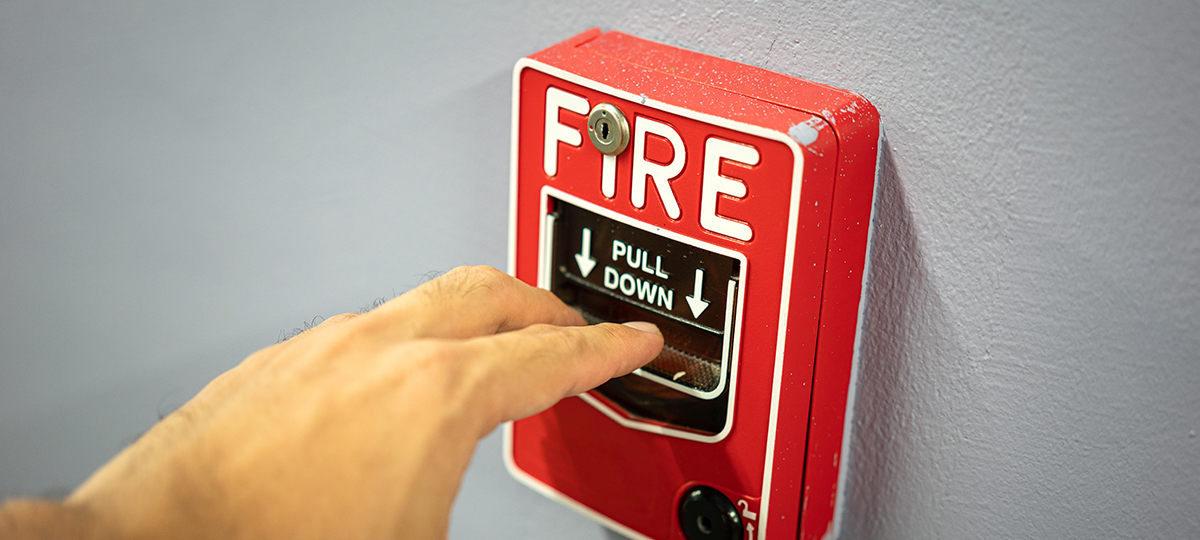
Manual fire alarms, also known as manual pull stations, are a way for people to alert occupants of a building and the local authorities to a fire emergency.
These fire alarms exist in either single-action or dual-action varieties. Triggering dual-action pull stations typically involves breaking a glass covering to reach the pull lever while single-action stations lack a glass covering.
Downsides to Manual Fire Alarms
Manual fire alarms have a few downfalls. First, manual fire alarms are only useful if someone is present, awake, and alert in the building in which the fire starts. Then, they rely on the judgment of the person to raise the alarm effectively and recognize fire signatures. Lastly, manual fire alarms can be misused—who hasn’t missed a class or two because someone pulled the fire alarm?
Automatic Fire Alarms
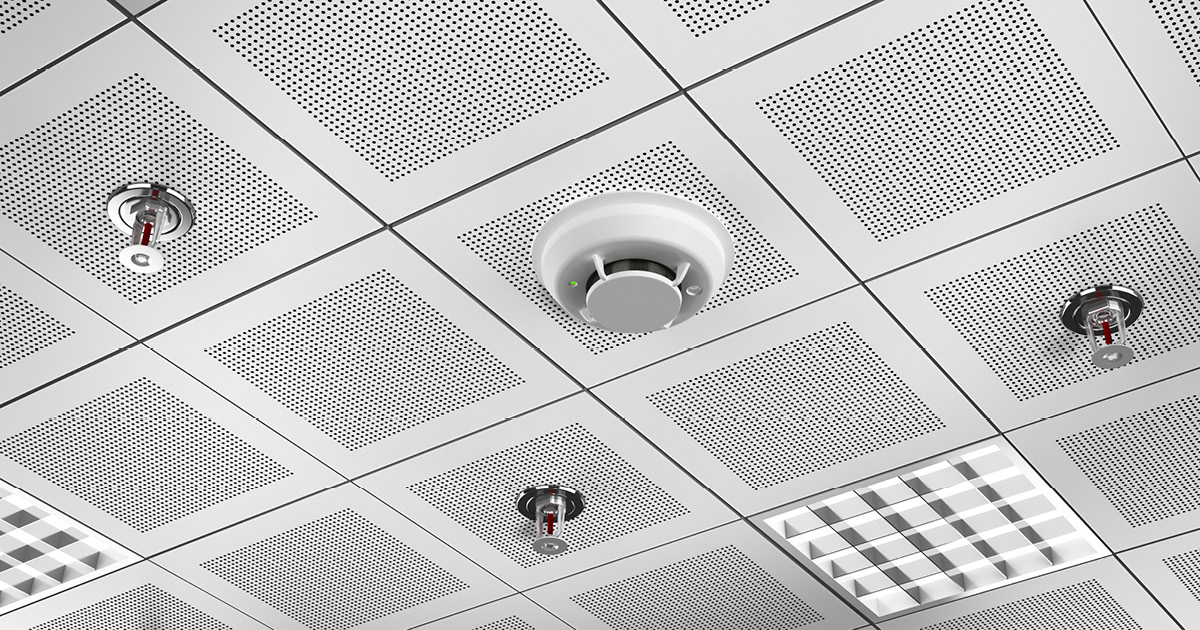
- Thermal detectors- these detect fire through a heat-sensitive element
- Smoke and carbon monoxide detectors – detect fire in its early stages, while it is smoldering and producing smoke or senses a build-up of certain chemicals in the air
- Flame detectors – line-of-sight devices that use infrared or ultraviolet light to detect radiant energy that is indicative of a fire signature
When these detectors are activated, they also will emit a warning sound to any occupants who might be in the building as well as send a phone or radio signal to notify emergency personnel that an event is underway.
Do I Need a Fire Alarm?
Fire alarm systems are critical for commercial building owners. Local building codes as well as the authority having jurisdiction will determine the type of fire alarm equipment you are required to have in the building, as well as how often it must be inspected and tested. The authority having jurisdiction over your building is typically the building or fire official of the city or county. Contact your local city/county government for specific details.
For assistance in designing and installing a fire alarm system as part of your business security system, contact FSS Technologies today for a free consultation.
Explore Our Other Blogs

Do Smoke Detectors Call the Fire Department?
One of the most asked questions about fire alarm systems is whether smoke detectors call the fire department. The belief that a smoke detector or fire alarm will automatically activate the fire department or send a signal to local first responders is a common misunderstanding. While some systems may be integrated with monitoring services, that’s not always…

Can I Install Monitored Security in My Apartment?
The most recent FBI data estimates that there are over 1.2 million burglaries a year, resulting in around $3.4 billion in property loss. Although property crime as a whole has been on the decline, the rise in popularity of video doorbells and more comprehensive and integrated home security systems shows that Americans are no less…

Wired vs. Wireless Security Cameras
Wired or Wireless? When we talk about wired versus wireless in-home security, it has little to do with whether a piece of equipment has physical wires attached to it. The terms wired and wireless refer to the communication signal that is transmitted from one piece of security equipment to another. For a security system to…
What is a Manual Pull Station?
A manual pull station is a wall-mounted fire safety device that triggers an alarm in the event of an emergency. Pull stations are commonly found in many public buildings across the United States and Canada. Most people have seen them, and some have possibly even pulled one before, whether for a real emergency or a…
When Is Automatic Fire Detection Required?
A fire detection system is a good idea for your property, and many insurance companies offer discounts based on your level of protection. While not required in your private residence, the law does require automatic fire detection in a wide array of other facilities. Local Building Code Requirements Your state’s building code will spell out…

The Only SimpliSafe Review You Need to Read
What is SimpliSafe? SimpliSafe is one of several do-it-yourself home security systems on the market. The challenge with any DIY home security system, in our opinion, comes down to the customer experience. SimpliSafe’s customer support offers minimal assistance to ensure you adequately install and troubleshoot your system. While they do provide an 800-telephone number, the…

What to Know About Smart Locks
Smart locks have been on the market for several years and continually gain features as technology advances. Learn how useful they can be and how to find the best option for your home or business. What’s a smart lock? Smart locks are door locks controlled digitally. These locks can be monitored and controlled by an…

8 Home Security Tips
With more than 45 years of experience in the home and business security industry, here are our top eight tips for discouraging intruders and burglars from targeting your home. 1. Create the illusion that someone is at your house. If you are going to be gone for an extended time, leave a light or TV…
Can You Get in Trouble for Breaking into Your Own House?
Is it legal for you to break into your own house? Yes, you can get in trouble for breaking into your own house—at least temporarily. If the police are notified that there is a break-in at a residence, either by a neighbor or a security alarm, they can detain or arrest you until you can…

Fire Safety Procedures for the Workplace
The bad news—a fire breaks out in your workplace. The good news—you are ready because you have done your homework and prepared for the possibility of an emergency. Emergency Action Plan The Occupational Safety and Health Administration (OSHA) requires most employers to have an emergency action plan for various scenarios, including fires in the workplace. There are…