Where Should Fire Alarm Pull Stations Be Located?
While they generally go unnoticed until a moment of need, fire alarm pull stations are an integral part of a business or large residential building’s commercial fire system.
What is a fire alarm pull station?
As opposed to a smoke detector or sensor, human intervention activates a manual pull station and is the catalyst for setting off a fire alarm. These stations are utilized when someone identifies fire or smoke in a building, and the alarm has yet to go off.
A manual pull station is essential to any fire safety system because it provides a hands-on way for occupants to trigger an alarm if the smoke or heat detectors malfunction. This requirement is also part of NFPA 101, which is one of many NFPA codes and commercial fire safety standards regulated by local authorities having jurisdiction.
What’s the difference between single- and dual-action?
There are two common types of pull stations, which include single action and dual action. A single-action pull station is the simple version, where all one needs to do is pull down on the lever. A dual-action pull station means that someone needs to take two actions to sound the alarm. In some cases, that means opening a box or breaking glass around the handle before someone can access it.
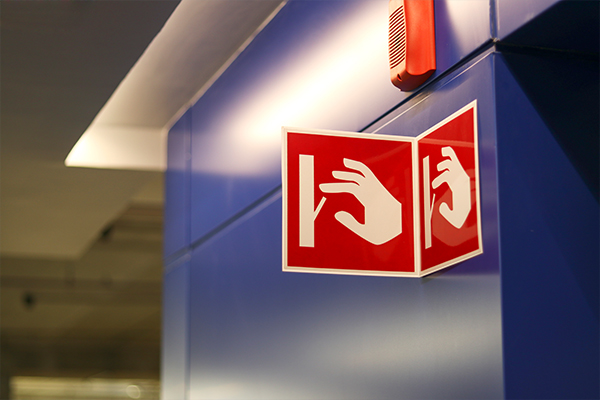
While a single-action pull station is more straightforward, there’s an introduced risk that a child or someone playing a practical joke can easily access the equipment. A dual-action system is more likely to prevent an accidental activation.
Where should I install pull stations?
The location of your fire alarm pull stations will depend on the design and occupancy of your building. While most buildings require at least one pull station, many buildings will need multiple across different floors and areas to meet standards set in NFPA 72, National Fire Alarm and Signaling Code.
Generally, fire alarm pull stations must be located within 200 ft of each other and 60 inches from exits. If your building has long hallways and a lot of exits, you are likely going to need a lot of fire alarm pull stations. A fire alarm pull station also needs to be placed between 42 and 48 inches from the floor with no surrounding obstructions, keeping it accessible to anyone.
How do I get started?
Business and building owners can get started with fire alarm pull station installations as they arrange their overall fire system installation. Working with the team of expert service technicians at FSS Technologies allows you to leave the details and the legal requirements of your building’s fire alarm system to us.
If you have any questions or want to set up a consultation, contact us today!
Explore Our Other Blogs

Fire Safety for Kids
Setting up fire alarm systems and fire monitoring are fundamental elements in your home’s fire safety plan. However, that is only the beginning. Educating your children on fire prevention, fire safety, and how to manage an emergency are vital in keeping your family safe. According to the American Red Cross, not only are children under five…
Carbon Monoxide Detector Basics
What is a Carbon Monoxide Detector? Carbon monoxide (CO) is a colorless, odorless, and tasteless gas or liquid that is poisonous to humans. Detectors are designed to identify carbon monoxide leaks and warn those in your home or business. This advanced warning can save lives as it allows you to get outside as fast as…

Alarm Monitoring Services: How They Work
An ear-piercing siren and flashing strobe lights create an immediate sense of emergency and indicate an alarm of some sort has been triggered. Now that the alarm has been triggered and the warning sirens have sounded, what happens next? If you have a monitored security system, it won’t just be the neighbors or passerby alerted to…
Commercial Fire Extinguisher Compliance Guide
Fire extinguishers are one of the most visible fire protection tools in a building, and they’re often the first line of defense when a fire starts. But having extinguishers installed throughout a structure is only part of the equation. If a unit is blocked, missing a safety pin, damaged, partially discharged, or overdue for servicing,…

Inside the Mind of a Burglar
What Message Are You Sending? Whether you know it or not, your business could send a message to potential burglars about how easy or difficult it is to break in. Professional thieves can quickly assess a property, also known as “casing,” to determine if it could be an easy and lucrative target. Unfortunately, many employees…

Cost of Home Security Systems
Getting a security system for your home is a wise investment. While the obvious benefit is protection for your family, home, and belongings, it’s hard to put a price on the peace of mind that comes from knowing that you and your family will have professional help in case of an emergency. Still, you must…

How Your Internet Speed Affects Your Security System
Internet speed is a precious commodity in today’s connected homes. Internet speed is responsible for how quickly or slowly data moves from the internet to the application on your computer. Things like your mobile phone, television, computer, gaming system, and even appliances use the internet. And your home security system probably does too. The average…
Lowe’s Iris Line Goes Under
Many consumers are seeing red with the recent news that big-box retailer Lowe’s is shutting down service to its Iris smart home platform. Lowe’s launched its Iris cloud service in 2012 so it could sell its own smart home products to the public. Customers with an Iris smart hub, the heart of the network, could…
How is a Fire Sprinkler System Designed?
While fire sprinkler systems seem the same at first glance, there’s no one-size-fits-all solution for all commercial properties. Depending on a structure’s needs and circumstances, fire sprinkler systems use different combinations of various components. The ideal design should accommodate the unique features of each industry, layout, and operation. Whether you’re looking to install a fire…
What is a Backflow Prevention Device?
Backflow prevention devices aren’t the most visible part of a building’s fire sprinkler system, but they still play an important role at the water supply connection. If water ever reverses direction in the system’s piping, it can pose a contamination risk to the potable water system. That’s why many local water authorities require backflow prevention…