What is a Backflow Prevention Device?
Backflow prevention devices aren’t the most visible part of a building’s fire sprinkler system, but they still play an important role at the water supply connection. If water ever reverses direction in the system’s piping, it can pose a contamination risk to the potable water system. That’s why many local water authorities require backflow prevention devices as part of a compliant fire protection setup.
For backflow preventers, facility managers and property owners should keep an eye on two things: protecting water quality and avoiding preventable compliance issues related to testing and documentation. Both can be addressed with a clear approach to device selection, testing, and recordkeeping. Keep reading to learn what backflow means, how these prevention devices work, and what to expect from routine testing.
What are backflow prevention devices?
Backflow is the unwanted reversal of water in a pipe, where it moves in the opposite direction of its intended flow. When a fire sprinkler system connects to a water supply, the cross-connection point can create contamination concerns due to the potential reversal of water flow. Since these systems need water supplies to operate, backflow prevention devices are used to protect the potable side of the connection.
There are two main ways that backflow can happen:
- Backsiphonage: Backflow caused by a drop in supply pressure that creates a vacuum effect and pulls water backward. This can happen during events like a water main break, hydrant use, or other heavy demand that reduces pressure in the water system.
- Backpressure: Backflow that occurs when pressure on the system side exceeds the supply pressure, pushing water backward. This can happen when pumps, elevation changes, or other system conditions increase downstream pressure.
Backflow preventers are usually installed where the fire sprinkler supply connects to a structure’s water source, serving as a barrier between non-potable sprinkler piping and the potable water system. Exact placement and device requirements can vary depending on your building’s setup and local regulations, which are often determined by the Authority Having Jurisdiction (AHJ) and the local water authority.
What are the different hazard levels?
When backflow preventers are used for “low” or “high” hazards, it refers to the risk posed if water from a connected system flows into the potable water supply. A low-hazard situation generally means the reversed water contains pollutants that affect water quality but aren’t likely to create a health hazard. A high-hazard situation involves contaminants that could create a serious health risk if they enter the potable system.
Is a backflow preventer all you need?
Backflow prevention goes beyond installing a specific device on a fire sprinkler supply line and moving on. It’s a broader approach used to help ensure your building’s water supply stays protected over time. In practice, that means having the correct backflow prevention device in place and ensuring it’s routinely tested and properly documented per your local AHJ’s requirements.
In addition to preserving your facility and community’s overall water quality, an effective backflow prevention approach also makes it easier for your business to stay inspection-ready. Routine testing helps confirm the device is operating as intended, not just sitting in place. Clear documentation helps you stay prepared when the local water authority or AHJ requests proof of testing or compliance records.
What are the different types of backflow preventers?
Backflow preventers are designed to address different conditions, including backsiphonage, backpressure, and varying hazard levels. In fire sprinkler applications, the device type is typically chosen based on your building’s setup and local requirements from your water authority and AHJ. Here are some of the most common devices used for fire sprinkler connections, plus the hazards and backflow types they prevent.
Reduced pressure zone (RPZ)
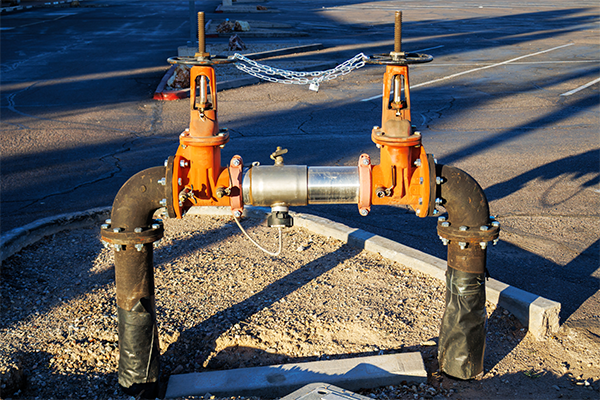
An RPZ assembly is commonly used when a higher level of protection is needed at the water supply connection. It can help protect against both backsiphonage and backpressure by using two spring-loaded check valves separated by a pressure differential relief valve. If a check valve experiences backflow, the relief valve can release water outside the system to protect the potable side of the line.
Double check valve assembly (DCVA)
A DCVA uses two spring-loaded check valves to help prevent backflow caused by both backsiphonage and backpressure. If the first check valve closes but doesn’t fully seal, the second check valve provides a backup layer of protection. A DCVA is similar to an RPZ assembly but doesn’t include an outside-discharging relief valve, so it’s more often used in situations with lower backflow hazard levels.
Pressure vacuum breaker (PVB)
A PVB assembly helps prevent backflow caused by backsiphonage, not backpressure. It uses a check valve and a spring-loaded air inlet valve that opens when system pressure drops, breaking the vacuum and helping prevent water from being pulled backward. Because PVBs are backsiphonage-focused devices, their use for fire sprinkler connections depends on the system’s configuration.
Detector assemblies (DCDA and RPDA)
Detector assemblies add a monitoring component to help track small or unexpected water use on a fire sprinkler connection. You may see this as a double check detector assembly (DCDA) or a reduced pressure detector assembly (RPDA), which are based on DCVA and RPZ designs but include a detector meter. These devices can help flag leaks, unauthorized water use, or other low-level issues that could go unnoticed.
Are backflow prevention devices required by the NFPA?
Unlike other aspects of fire protection, backflow prevention devices are not universally mandated by NFPA codes for every fire sprinkler connection. Backflow prevention requirements are typically set locally by your water authority or AHJ as part of cross-connection control. For building owners, the takeaway is simple: the “do you need one” question is usually answered by local rules, not by a single national requirement.
NFPA standards still help define how backflow preventers should be designed and maintained as part of the overall system. NFPA 13 addresses sprinkler system installation considerations that can affect backflow assemblies, including layout choices that preserve system performance and promote proper testing. NFPA 25 focuses on inspection, testing, and maintenance practices over time to support reliable operations.
How do I choose the right backflow preventer for a fire sprinkler connection?
Choosing a backflow preventer isn’t just about picking a device type and installing it. The right selection depends on how your fire sprinkler system connects to the water supply, what kinds of backflow conditions you need to protect against, and the level of hazard at the connection point. Most importantly, the final requirements are typically determined by your local water authority and AHJ.
Start with local requirements and hazard classification
In many cases, the first deciding factor is what your jurisdiction requires for the type of building and the specific connection. Your local AHJ or water authority may classify connections as low or high hazard, since that classification affects the level of device protection expected. If you’re unsure how your system is classified, confirm it early to avoid investing time in a solution that doesn’t meet local expectations.
Consider whether you need protection from backsiphonage, backpressure, or both
The type of backflow risk your system needs to address matters. Assemblies like RPZs and DCVAs are designed to protect against both backsiphonage and backpressure, while other devices like PVBs are intended only for backsiphonage. Understanding the possible conditions in your building’s setup can help narrow the options and avoid installing a device that doesn’t address the risks.
Factor in installation conditions and long-term serviceability
Backflow preventers are only effective when properly installed, accessible, and maintained. Installation location, freeze exposure, drainage needs, and access for routine inspections and testing can all influence what will realistically work in your facility. If your building’s device is difficult to reach or test, maintaining compliance and inspection readiness can become more complicated over time.
Think about monitoring needs for dedicated fire lines
Some buildings benefit from added visibility on fire sprinkler connections. Detector assemblies can help identify leaks or unauthorized water use that might otherwise go unnoticed, which can be useful for facilities with dedicated fire lines or for properties where water-use monitoring is a priority. This isn’t required in every situation, but it can be a practical consideration depending on your facility’s needs.

What should I expect from routine backflow testing and documentation?
Backflow testing requirements can vary depending on the device type, your system’s setup, and local requirements from your water authority and AHJ. Overall, routine testing is intended to confirm that the device is functioning properly, identify issues that need attention, and maintain the necessary records for inspection readiness.
Here’s what you can generally expect from each portion of the process:
- Inspections: A visual review of the assembly and surrounding setup to confirm it’s accessible, appears to be in serviceable condition, and ready to be tested.
- Maintenance: Any routine service or adjustments needed to keep the device operating properly, along with recommended repairs if components are worn or not performing as they should.
- Documentation: A clear record of what was tested, when it was tested, and what the results were, so you can provide proof of testing if it’s requested.
- Remediation: If a device fails a test, the next steps typically include repair or replacement, followed by retesting to confirm it’s back in proper working condition.
Add FSS Technologies to your backflow prevention approach
Backflow prevention helps protect potable water supplies, supports compliance with local requirements, and keeps fire sprinkler water supply connections managed responsibly over time. Still, many facility managers and property owners aren’t sure what’s being used or what their jurisdiction expects. If you need clarity, scheduling a consultation is a straightforward way to confirm what’s installed and required locally.
FSS Technologies can support your business with backflow prevention services for fire sprinklers, keeping you informed and protected. Our certified technicians handle backflow testing, installation, and ongoing maintenance, so you’re never left guessing about device condition or documentation. If you need help confirming what type of backflow preventer you have or scheduling routine testing, get in touch today.
Explore Our Other Blogs

Choosing a Safe Neighborhood in Chicago
There are a lot of great places to live in Chicago. From the historic vibe of Printers Row to the ultra-stylish River North, there are neighborhoods to fit every personality. But are they safe? It turns out, many of them are. According to Niche.com—which ranks neighborhoods based on crime, schools, cost of living, etc.—the short commuting times…

How Do Fire Sprinkler Systems Work?
Fire sprinkler systems work by detecting heat from fires and releasing water to extinguish them. Different components work together in various configurations to boost a structure’s fire and life safety measures. Learn how a fire sprinkler system works, what your options are, and why it’s a necessary investment for your business. What are the main…

The Cost of Alarm Monitoring vs. the Cost of a Break-In
Property crime in the United States is costly. According to the FBI’s Uniform Crime Reporting (UCR) program, property crimes in 2018 resulted in an estimated $16.4 billion of losses. The Cost of Crime Larceny-theft is the most common of all property crimes, accounting for 73.4 percent. Larceny-theft is defined as the unlawful taking, carry, leading,…
Livly: A Modern Residential Community Experience
The Livly property and tenant management system is one of the most cutting-edge and all-inclusive apartment app experiences available today. The system offers low-cost technology and fully integrated experiences that pair well with a variety of existing property management systems. As a proud partner with Livly, FSS Technologies offers this trusted technology solution for both…

Advantages of Having an Alarm System
There are a lot of advantages to having an alarm system. For starters, the National Council for Home Safety and Security says that homes without an alarm system are three times as likely to get burglarized. 3 Benefits of Alarm Systems Peace of mind Protecting your home from intruders is one of the most common…

Winter Commercial Fire Safety Tips
While fire safety and prevention are crucial year-round, unique fire hazards accompany winter’s freezing temperatures. The National Fire Protection Association (NFPA) reports that many holiday-related factors contribute to an increased fire risk during the winter months, and commercial settings are just as vulnerable. Besides creating and reviewing company-wide fire safety procedures, here are 4 tips…

What are Fire Ratings?
Any business owner would be devastated by a fire, and most turn to fire safety systems for preventative and protective solutions. Still, many are unaware that their building’s materials can directly influence how a fire impacts their building’s structure. In addition to investing in a comprehensive fire safety system, it is critical to consider the…
What is an Emergency Action Plan?
The purpose of an Emergency Action Plan is to inform employees of what actions they should take if an emergency occurs at work. It’s required by the Occupational Safety and Health Administration (OSHA), and it can be critical in preventing the loss of property, or lives, in a crisis. If an emergency alarm went off…

DIY Security Systems
DIY home security systems have been on the market for years, offering homeowners the ability to order and install a simple-to-use system for their property. A DIY system often boasts cheap and easy security solutions for a home but are not the right fit for all homes. Cost-Benefits As with almost everything in life, cheaper isn’t…

Ring Doorbell Cons
Video doorbells are a great addition to home security, and Ring is the popular choice for many who prefer wireless security. Although there are some pros to the Ring Doorbell, it has some cons you should be aware of before purchasing from Ring. Monthly Fee for Storage The cheapest Ring doorbell is $59.99, with the…