Types of Fire Suppression Systems
Fire suppression is one of the most important layers in a commercial building’s life safety plan because it is designed to control a hazard early, often before conditions spread beyond the point where occupants or staff can safely intervene. That matters for more than just damage control—it affects potential interruptions, compliance issues, and emergency performance.
At a high level, most facilities rely on some mix of detection, alarms, portable equipment, and fixed suppression. The right combination depends on the occupancy, the hazards present, and what the space needs to protect, including people, property, and critical equipment. Keep reading to discover what a suppression system does and how to choose the right configuration for your business.
What is a fire suppression system?
A fire suppression system is a fixed extinguishing setup designed to detect a developing hazard and discharge a specific agent to control it. The agent depends on the issue and the environment. Common options include water-based discharge, gaseous agents, foam, wet chemical agents, and dry chemicals.
Suppression is typically integrated with detection and alarm components so activation can occur early and occupants can be alerted to evacuate or respond in alignment with the building’s emergency plan. In a broader life safety approach, suppression is one of the building’s many protection systems, working alongside alarms, emergency lighting, exit access requirements, and other safeguards.
What equipment is included in a typical setup?
Most suppression configurations rely on the same categories of components, even when the agent changes. A typical installation includes detection equipment, control equipment, and the discharge network. It also includes fire suppression equipment that stores the agent and releases it where needed.
Detection and activation equipment may include:
- Smoke, heat, or flame detection devices (based on the environment)
- A control panel that supervises the protected area and initiates discharge
- Releasing and actuation components that trigger discharge when conditions are met
- Manual activation devices in certain applications
- Audible and visual notification appliances
Discharge and suppression equipment may include:
- Cylinders or tanks for agent storage
- Piping or distribution tubing
- Discharge nozzles, sprinklers, or misters
- The extinguishing agent itself
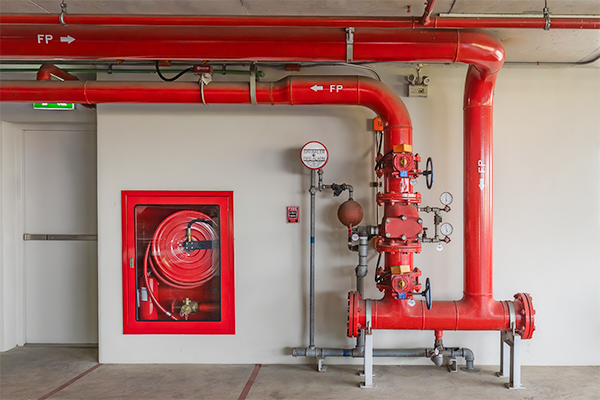
In some environments, automatic fire suppression systems will initiate once a hazard is detected. In others, the setup may include staged activation, pre-discharge warnings, or manual release procedures to reduce the risk of accidental discharge. The right design is tied to each space’s hazards, occupancy, and operational realities, so no two configurations are completely identical.
What are the main types of suppression materials?
Different classes of fire require distinct materials to extinguish them, so a suppression system can use one of several agent options. Each material also sets different expectations after discharge, including cleanup requirements, downtime, and equipment impact. Explore the five most common fire suppression agents and how they offer unique benefits to various commercial settings.
1. Clean agents
Clean agent suppression uses gaseous agents to control combustion without leaving residue. This category is often used in environments where water damage or powder residue could cause significant operational impacts to electronics and other sensitive equipment. Because effectiveness depends on reaching and holding the right concentration, clean agents typically perform best in areas that are reasonably enclosed and paired with the right detection and release design.
Clean agent configurations are commonly used in spaces such as:
- Server rooms and data closets
- Electrical rooms and control areas
- Imaging rooms in healthcare facilities
2. Carbon dioxide (CO2)
CO2 suppresses combustion by displacing oxygen. It can be effective and typically leaves minimal cleanup afterward, but it also introduces important life safety considerations, especially in spaces that may be occupied during discharge. Because of the safety planning it requires, CO2 is usually limited to applications where access controls, warnings, and operating procedures can be managed carefully.
CO2 suppression is commonly used in areas like:
- Paint spray booths and other small hazardous spaces
- Storage or dispensing sites for flammable materials
- Equipment or machinery rooms that are typically unoccupied
3. Water mist
Water mist suppression uses fine droplets discharged at higher pressures than traditional sprinkler systems. Mist can control heat and suppress combustion while using less water than conventional sprinkler discharge, which may help reduce water impact in some environments. Water mist systems differ from fire sprinklers because they use specialized equipment to generate fine droplets and distribute them throughout the protected area.
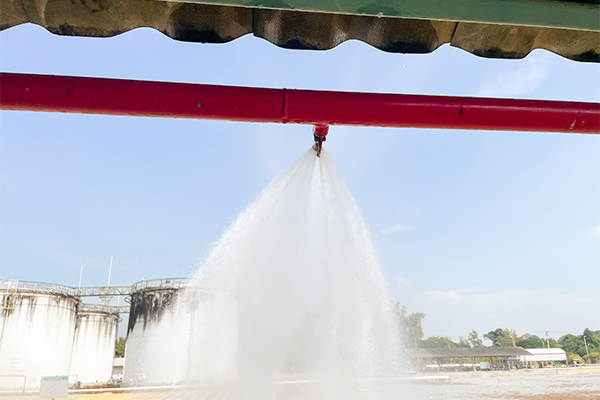
Water mist fire suppression is commonly used in:
- Buildings where a water-based agent is preferred at a limited volume
- Areas where fine droplet distribution supports the hazard and room layout
- Certain special hazard environments where mist is engineered to mitigate the risk
4. Wet chemicals
Wet chemical systems are commonly used for commercial cooking hazards, especially grease and high-temperature oils. These hazards behave differently from ordinary combustibles, which is why kitchens often can’t rely on water or another general-purpose agent. The goal is not only to suppress active flames, but also to reduce the likelihood of re-ignition when cooking surfaces and oils remain extremely hot.
Wet chemical configurations are commonly used in spaces such as:
- Commercial kitchens
- Cooking lines and hood setups
- Grease-producing appliances and ventilation configurations
5. Dry chemicals
Powder-based dry chemical agents are designed to quickly knock down flames. This category is common in industrial and special hazard environments where fast control is the priority and where other agent types may be less effective for the hazard. Dry chemical systems are often chosen for speed, but they also can lead to significant residue and cleanup after activation, which can affect downtime and nearby equipment.
Dry chemical systems are commonly used in spaces such as:
- Businesses in the manufacturing industry with elevated hazard potential
- Locations with flammable liquid risks (based on the specific agent and application)
- Certain equipment or process environments where powder discharge is appropriate
Are fire extinguishers enough, or do I need a fixed suppression system?
Fire extinguishers are an essential part of a commercial building’s fire protection system, but they’re not a replacement for fixed suppression. Portable extinguishers rely on a person to recognize a developing hazard, respond quickly, choose the right extinguisher, and use it correctly. Even then, the extinguisher may not have enough capacity to fully control the situation, especially if conditions have worsened or spread.
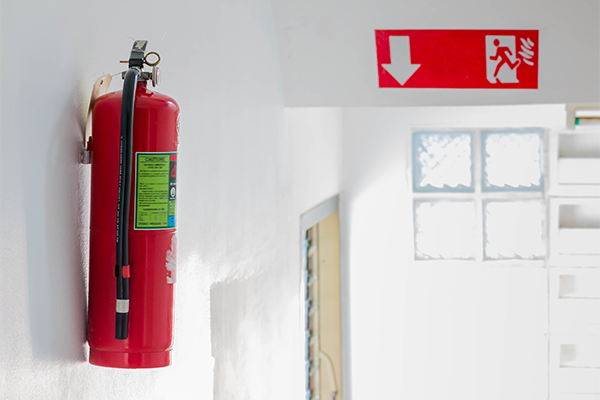
Fixed suppression is designed to respond earlier and more consistently. Depending on the space and hazards, a fixed setup can automatically activate upon detection, deploy an agent that matches the risk, and support other life safety measures without human involvement. This is especially important in areas where the hazard could escalate quickly, or where a manual response could put employees at risk.
How do I choose the right approach for my business?
A practical way to narrow down the right fit is to start with what your space is protecting and what an activation would mean for operations. From there, you can match the agent and equipment to your hazards and the way each space is accessed and used. Cleanup demands, downtime risk, and the impact on electronics or inventory are often what separate “acceptable” options from the best one for your building.
Common factors that should guide your choice can include:
- Equipment limitations: Some environments can tolerate water exposure or residue, while others can’t. Sensitive electronics, high-value assets, and mission-critical equipment should be major factors in selecting a suppression agent.
- Occupancy and function: Areas that are normally occupied, open to the public, or difficult to evacuate may call for a different approach than controlled-access spaces or equipment rooms.
- Present hazards: Commercial cooking, flammable liquids, industrial processes, and ordinary combustibles each require different materials and discharge methods. The right approach should match the risk, not just the building type.
- Cleanup tolerance and downtime: Some agents are designed to minimize residue and shorten recovery time. Others may control the hazard quickly but create more cleanup afterward.
- Local requirements and compliance expectations: Requirements often depend on occupancy type, hazards, and jurisdiction. In many commercial settings, NFPA codes and requirements from your Authority Having Jurisdiction (AHJ) will likely shape how equipment is selected, installed, inspected, and maintained.
Optimize your fire suppression system with FSS Technologies
Even the best suppression setup depends on small details, such as the hazards present, how the space is used, and what needs to be protected. If you’re not sure which approach fits your building, it’s worth getting a second set of eyes before you commit to an agent type or equipment layout. Working with an experienced life safety company can ensure you’re on the right track from initial installation to everyday upkeep.
Whatever your next step is, FSS Technologies can help you take it with confidence. Our NICET-certified technicians support commercial facilities with design, installation, inspection, and ongoing maintenance across the systems that work together to protect your building, from fire suppression equipment to access control systems and much more. Get in touch to learn more and book a consultation today.
Explore Our Other Blogs

The Ins and Outs of Your Business’s Fire Alarm Installation
A fire alarm system is part of the business security system that keeps your business, property, and employees safe. A fire can become life-threatening in two minutes and can engulf a building within five minutes. Your business could go up in flames in a matter of moments without the proper equipment and detection systems in place to protect everything…
What are the Different Kinds of Security Video Storage?
Security Video Recordings Storage How much storage does a security camera have? It is a seemingly simple question, with a surprisingly complicated answer. Security and surveillance cameras can use a variety of storage types, each with their own advantages and disadvantages. To choose the right security video storage for you, you will need to consider…

DIY Security Systems
DIY home security systems have been on the market for years, offering homeowners the ability to order and install a simple-to-use system for their property. A DIY system often boasts cheap and easy security solutions for a home but are not the right fit for all homes. Cost-Benefits As with almost everything in life, cheaper isn’t…
Can Video Surveillance Be Used In Court?
You should talk to a law enforcement professional in your area to know for sure what is admissible in your local court, but here are some general guidelines about criteria that law enforcement will take into consideration regarding your security camera video. Authenticity A digital watermark is undetectable to the human eye, but it can…

How to Maintain a Commercial Security System
Updated May 2023 With the latest advances in security technology, it’s becoming easier for small businesses to find a security system that works for their needs. Whether your business just installed your commercial security system or has been utilizing security measures for some time, proper maintenance will increase the life of your system and provide…

How to Conduct a Physical Security Audit
Protecting your livelihood is at the top of every business owner’s mind, but how do you know if your business is truly protected? By performing a physical security audit, you can fully assess any threats that your business might be subject to and take the necessary steps to mitigate those threats. During a physical security audit, each aspect of the business and its security…

What are Fire Ratings?
Any business owner would be devastated by a fire, and most turn to fire safety systems for preventative and protective solutions. Still, many are unaware that their building’s materials can directly influence how a fire impacts their building’s structure. In addition to investing in a comprehensive fire safety system, it is critical to consider the…
What is an Emergency Action Plan?
The purpose of an Emergency Action Plan is to inform employees of what actions they should take if an emergency occurs at work. It’s required by the Occupational Safety and Health Administration (OSHA), and it can be critical in preventing the loss of property, or lives, in a crisis. If an emergency alarm went off…
Elements of a Business Security System
How can I secure my business? A business security system needs to protect people, property, and assets from theft, crime, and fire at all times of the day and night. The people walking in and out the doors of a business are not only its owners, but customers, employees, vendors, and suppliers who have varying…

DIY Home Security Cameras
DIY Security Systems Are the New Fad There are many pre-configured, DIY home security system kits on the market. They are sold under various brand names including Ring, Nest, SimpliSafe, and others. The basic idea of a DIY home security system is that you pay one low fee to purchase all of the equipment and…