Security Cameras Are Not Created Equal
The Difference in Security Cameras
Cameras are one of the most critical components in your security arsenal, and not all security cameras are the same.
Why you ask? Consider these differences:
- Various types and sizes of cameras
- Indoor vs. outdoor cameras
- Cameras that are easy to camouflage
- Cameras that provide high-quality video footage
- Wired cameras vs. wireless cameras
And the list goes on…
With any investment, it’s critical to do your homework to ensure you are getting the most from your purchase.
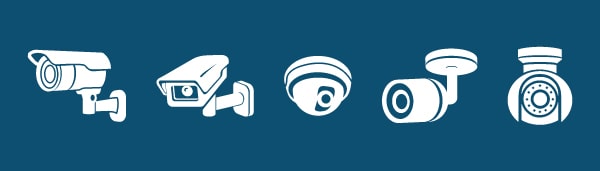
Types of Security Cameras
These are some of the most common types of security cameras we install for home or business use; however, they are not the only options available.
- Video doorbell cameras – See who is at your front door without leaving the couch or even when you aren’t at home. Read more about this in our blog, How Video Doorbells Work.
- Bookshelf cameras – Designed to be placed on shelves so that they can blend in with the surroundings.
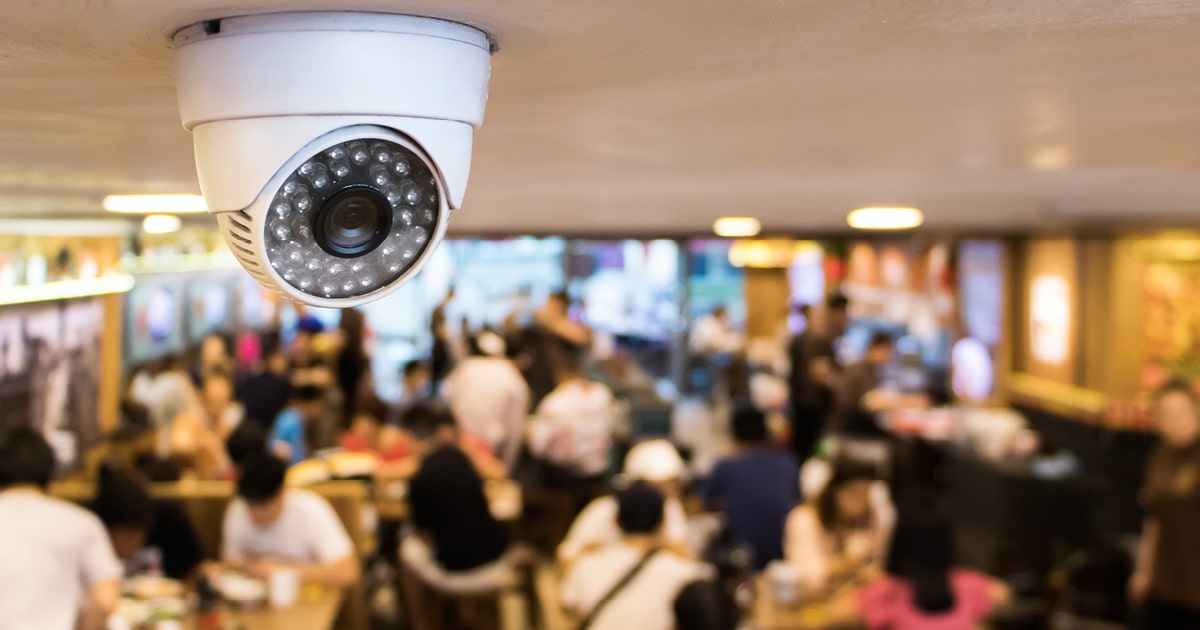
- Dome cameras – Offer a wide dynamic range for adjusting to natural changes in light.
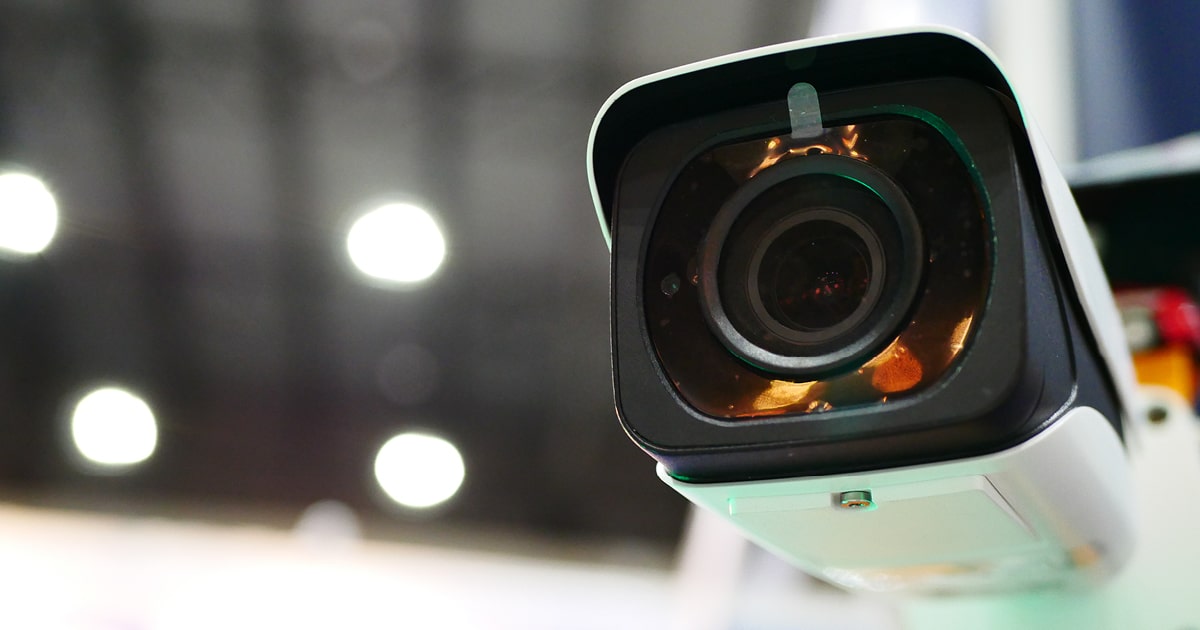
- Bullet cameras – Have small, unobtrusive housings that also offer options for infrared light.
- 360 Fisheye cameras – Allow for a panoramic view of the surroundings.
- Pan-tilt-zoom cameras (PTZ) – Can be moved with a joystick or mouse directly from a security desk.
- Turret cameras – Are also known as a “mini dome.” These are designed like a ball-and-socket and are a hybrid of the dome and bullet camera.
Indoor vs. Outdoor
There are two main features you should consider when evaluating a camera for indoor and outdoor usage:
- How does the camera adjust to different lighting conditions? This is important in both indoor and outdoor settings.
- Is the camera weather-resistant or waterproof?
To learn more about the importance of lighting for cameras and the different options available, read our blog, How do security cameras work at night?
Cameras that are placed outside need to be designed to withstand rain, snow, and extreme temperatures. Many cameras today are marketed as weatherproof or weather resistant. Make sure you find the Ingress Protection (IP) rating on the camera. This indicates how well that camera will hold up against the elements.
The IP rating tells you how well the camera casing is built to withstand against dust or water entering a product’s enclosure. There are two numbers in the rating. The first number in the score is for dust and the second is for water. The ratings range from 0 – 6 for the dust protection and 0 – 9K for the water protection. The lower the number, the weaker the protection, so 0 doesn’t offer any protection.
Image Quality
When it comes to the quality of the image you can see from the camera, in addition to how the camera handles different lighting conditions, there are two other essential features you’ll want to consider: field of view and resolution.
The field of view on a security camera refers to how much of your surroundings the camera can detect. Field of view is usually expressed as angular size, so anywhere from 90 degrees to 180 degrees. If you are monitoring a small area, such as a front porch, a narrow field of view on your camera may be fine. However, if you are trying to monitor a large area, such as your backyard, you will need to look for a camera with a broader field of view. A larger field of view will allow you to see a broader area, but that doesn’t necessarily mean it will be clearer. You also need to consider the resolution.
The resolution of a camera is the amount of detail a camera can capture. It is measured in pixels. The more pixels a camera has, the more details it can capture and the larger the pictures can be made without becoming blurry. Standard definition is defined as a pixel size of 640 pixels wide by 480 pixels high. High definition is a camera that captures 1280 x 720 pixels, and full HD is 1920 x 1080.
Shooting in full HD is nice, but remember, these videos take up a lot more storage space.
Storage is a big issue for security cameras. Where are you going to store all the video shot by the camera? Do you want your camera shooting video all the time or only when the camera senses motion nearby? If you want the latter, your camera needs to be outfitted with motion detectors too.
Some cameras have internal storage devices. Some cameras allow you to install an external hard drive for storing camera footage. Of course, with either of these options, the footage can easily be stolen or destroyed.
Another option might be connecting the camera to a digital video recorder or wiring it to route straight to your home computer.
You also have the option to use wireless or cloud storage. Cloud storage is when the video footage is uploaded from the camera via an internet connection to either your personal computer, a network video recorder, or cloud storage. This usually incurs a monthly fee. You’ll also want to consider if your internet bandwidth is adequate to support your camera’s needs in this scenario. Read more in our blog, What upload speed do I need for a security camera?
Wired vs. Wireless
Wired vs. wireless refers to how the communication signal is transmitted from one piece of security equipment to another.
Communication signals can be transmitted using an analog or digital format. Then they are routed through a wired connection, like a telephone or cable line. They can also be transmitted via a wireless connection that uses radio waves to send the transmission, such as cellular, laptops with WLAN card, fiber optic communication, etc.
When it comes to security cameras, there are pros and cons to each type of transmission method. We’ve detailed all of those pros and cons in our blog post, Wired vs. Wireless Security Cameras.
You will also need to consider how you want your security camera to be powered. Just because it is a wireless camera, it doesn’t mean wires aren’t involved. How will you get electricity to your camera? You either must power the camera into an outlet to charge, or it must run on batteries.
Other Features to Consider
Other features to consider when choosing a security camera include:
- Can the camera record audio, or does it allow for two-way audio?
- Does the camera have app support?
- Can the camera be integrated with a smart home automation system?
In today’s ever-changing video surveillance market, FSS Technologies strives to stay on top of all the industry trends and provide recommendations on the wide variety of equipment available, from reputable manufacturers with proven track records.
Contact us today for a free, no-obligation consultation, and learn more about the best way to protect your home or business.
Explore Our Other Blogs

Monitored vs. Unmonitored Security Systems
If you’re thinking about installing a security system, you may be wondering if monitoring is a necessary feature. While an unmonitored system is better than nothing at all, there are some critical things you should consider before making a decision. The Benefits of Monitoring The noise and commotion caused by the sirens and lights associated…
Holiday Security Tips
It’s a beautiful time of the year, but the holidays come with some inherent risks that you should prepare for amidst all the gift buying, cooking, and decorating. Here are some of our top holiday safety tips to keep your home and loved ones safe over the season. Theft and Burglary Prevention Do not put…
Addressable vs. Conventional Fire Alarms
When determining what type of fire alarm systems are best for your business, it boils down to your choice between a conventional and addressable alarm system. The combination of smoke, heat, and carbon monoxide detectors work together with your control panel to keep your business safe. Additionally, you will need to determine what kind of automatic…

How to Maintain a Commercial Security System
Updated May 2023 With the latest advances in security technology, it’s becoming easier for small businesses to find a security system that works for their needs. Whether your business just installed your commercial security system or has been utilizing security measures for some time, proper maintenance will increase the life of your system and provide…
Analog vs. IP Cameras: Key Differences
When you are considering different security systems and potentially implementing surveillance cameras into your home or business, a big question is whether you want IP or analog cameras. Global Market Insights estimates that the IP camera market will be worth more than 20 billion by 2025. With today’s technology both IP and analog systems can be viewed…

Choosing a Safe Neighborhood in Chicago
There are a lot of great places to live in Chicago. From the historic vibe of Printers Row to the ultra-stylish River North, there are neighborhoods to fit every personality. But are they safe? It turns out, many of them are. According to Niche.com—which ranks neighborhoods based on crime, schools, cost of living, etc.—the short commuting times…
Business Security Camera Placement Guide
Security camera placement in a business needs to be strategically decided based on several important factors. Areas that store valuables, have high foot traffic, and enable access to your building should be some of the essential locations. Learn more about what kinds of security cameras you can use and where they should be installed in…

5 Ways Your DIY Security System is Failing You
In the digital age, DIY projects are the rage in all things, including home security. People turn to DIY home security because it seems easy and can save you a few bucks. Unfortunately, you really do get what you pay for if you choose a DIY security system. Whether you are a homeowner, a business owner, or…

8 Home Security Tips
With more than 45 years of experience in the home and business security industry, here are our top eight tips for discouraging intruders and burglars from targeting your home. 1. Create the illusion that someone is at your house. If you are going to be gone for an extended time, leave a light or TV…

Can Video Doorbells Be Used in Apartments?
It is at the discretion of your building manager as to whether you can use a video doorbell for your apartment. There usually are two concerns that arise when it comes to video doorbell usage in a rented property: installation concerns and privacy concerns. Issues with Video Doorbells Installation Concerns Many video doorbell systems require…