Addressable vs. Conventional Fire Alarms
When determining what type of fire alarm systems are best for your business, it boils down to your choice between a conventional and addressable alarm system. The combination of smoke, heat, and carbon monoxide detectors work together with your control panel to keep your business safe. Additionally, you will need to determine what kind of automatic and manual fire alarms you want to be installed.
While the installation for different systems may vary, the type of system you require will be in part described by the NFPA standards and the Authority Having Jurisdiction in your area.
Conventional Fire Alarm Systems
A conventional alarm system has numerous devices on a single pair of wires and may cover up to 20,000 square feet per zone. Typically, conventional systems are used for small facilities with few devices. Because there may be numerous devices on a single pair of wires, when an alarm is activated, there is no indication of which device was initiated at the panel. In order to determine which device was initiated you will have to inspect each device. Conventional systems are typically no longer acceptable by Authorities Having Jurisdictions.
Addressable Fire Alarm Systems
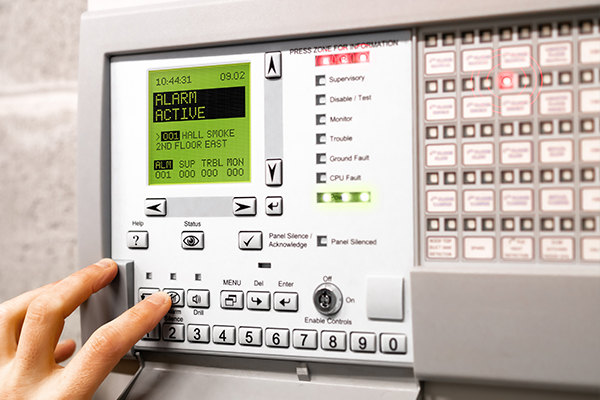
In contrast, an addressable system connects all devices using a loop, a single pair of wires for as many as 250 devices. Each device on the loop has an address as well as a description which is usually the location. When an alarm is activated, the individual address and description is displayed on the panel’s LCD. These systems are the most popular system across the industry today, and most jurisdictions require addressable systems.
These are better suited for large and complex systems because the loop technology means simplified wiring. Additionally, an addressable system offers more protection against false alarms because there are options that allow you to set up warning triggers. These warnings can help you identify potential false alarms and solve the issue before evacuating a large building.
Cost Differences
Conventional alarm systems are less expensive because the equipment required is simple, but they are more time consuming and labor intensive to install because of the multiple connections to the control panel.
An addressable system requires less wire and is a more simplified connection to the control panel itself. Addressable systems include more updated technology and advanced options, which would make it more expensive.
How to Choose
Generally, the size and type of your business will determine whether an addressable or conventional system is best suited to your building.
Addressable systems offer significantly advanced technology. New smoke detectors can tell the difference between a smoke particle and steam. Troubleshooting is significantly reduced on addressable systems due to advanced software and programming built into the system. In general, addressable systems are the best option for most facilities. If you still aren’t sure, our experts at FSS Technologies can assess your needs and help you determine what equipment and devices your building will require.
Once you have determined and installed your fire alarm system, you will be able to create fire safety procedures for your workplace and begin training your employees to be familiar with the system.
Give the fire alarm pros at FSS Technologies a call to learn more about our security and fire alarm system installation options. We are happy to answer any questions you may have.
Explore Our Other Blogs

Choosing a Safe Neighborhood in Chicago
There are a lot of great places to live in Chicago. From the historic vibe of Printers Row to the ultra-stylish River North, there are neighborhoods to fit every personality. But are they safe? It turns out, many of them are. According to Niche.com—which ranks neighborhoods based on crime, schools, cost of living, etc.—the short commuting times…

Livly: A Modern Residential Community Experience
The Livly property and tenant management system is one of the most cutting-edge and all-inclusive apartment app experiences available today. The system offers low-cost technology and fully integrated experiences that pair well with a variety of existing property management systems. As a proud partner with Livly, FSS Technologies offers this trusted technology solution for both…
Emergency Egress 101 for Commercial Buildings
When people think about emergency egress, they usually picture exit signs and the nearest door. In reality, egress is the entire route occupants rely on to get out quickly and safely—often under heightened stress, reduced visibility, and crowded conditions. When a means of egress isn’t clear or usable, even a minor emergency can turn into…

What Is a Central Station Alarm?
A central station alarm system is one that feeds directly into a central monitoring station. If a sensor on the central station alarm system is triggered, such as fire, smoke, C02, or burglar, the system does much more than just set off a loud siren or send an email alert telling you to log into…
Kidde: Innovations in Fire Safety
Your fire alarm system can protect your family, home, and belongings from fires, gas leaks, and other hazards. FSS Technologies is committed to providing its customers with top-of-the-line fire safety and emergency prevention technology, which is why we are a proud provider of products from Kidde, North America’s most installed fire safety brand. Learn about…

Can Video Doorbells Be Used in Apartments?
It is at the discretion of your building manager as to whether you can use a video doorbell for your apartment. There usually are two concerns that arise when it comes to video doorbell usage in a rented property: installation concerns and privacy concerns. Issues with Video Doorbells Installation Concerns Many video doorbell systems require…

Fire Prevention, Protection, and Suppression Systems
Fire safety is a crucial matter that every business should prioritize. Whether it’s caused by arson or an accident, a fire can cause catastrophic damage to a company’s property, inventory, and equipment if the proper protection measures aren’t in place or there are operational issues. In more unfortunate cases, insufficient fire safety standards can put…

7 Ways Home Monitoring Keeps Your Pets Safe
Your family’s safety is at the forefront of your mind when installing a security system, and that includes your pets as well. When researching a security product that suits your needs, consider the ways that this technology can help your pets stay safe too. We have detailed some of the most common hazards as well…
3 Types of Security Lights
Your security system is only useful if you can see what is going on when you can’t be there. This also means that when it gets dark, your cameras need to be able to capture the image clearly. To do this past dusk will require that you set up security lighting. Additionally, check out the…

Big Name Home Security Gimmicks
We talk about choosing between a national home security company and a local company, DIY Security systems’ weaknesses, and video doorbells. Choosing a security system can be stressful and overwhelming, especially when you and your family’s security is at stake. So how do you choose a home security system? Do Your Homework It’s critical to do…