Winter Commercial Fire Safety Tips
While fire safety and prevention are crucial year-round, unique fire hazards accompany winter’s freezing temperatures. The National Fire Protection Association (NFPA) reports that many holiday-related factors contribute to an increased fire risk during the winter months, and commercial settings are just as vulnerable. Besides creating and reviewing company-wide fire safety procedures, here are 4 tips to help you protect your business from the dangers of common winter fire hazards.
1. Decorate safely
Holiday decorations bring joy to any company’s employees and customers during the holiday season but can become dangerous hazards if misused. While you may want your storefront or office to stand out with top-of-the-line lights and decor in December, misusing or overloading outlets and extension cords can quickly lead to electrical fires. Many holiday decorations are also made of flammable materials that can turn a small flame into a blaze within seconds, so following proper precautions is crucial in preventing fires.
If you plan to use lights or other plug-in items in your building, ensure everything meets your local electrical and fire safety standards. Replace any strand of lights or electronic decorations if they flicker or stop working. Overloading outlets with misused extension cords is a year-round fire safety violation that can easily cause an electrical fire. Use them properly or avoid using them if possible. Keep decorations like trees, greenery, and other flammable fixtures at least a few feet away from open flames, light fixtures, and other heat sources.
2. Use heat sources properly
Whether it’s a large patio heater for customers or a portable space heater at an employee’s desk, a heat source can pose severe risks if misused to combat cold weather. If a space heater is placed too close to furniture or other flammable materials, the increased heat can increase the chance of a fire. Because of their electrical demand, space heaters may have a greater chance of causing problems when plugged into an extension cord or used in large numbers throughout a building. Additionally, older space heaters and poorly maintained fireplaces can lack protective features or be more prone to malfunctions.
The primary solution for heat source fire hazards is to ensure your HVAC system is in working order to keep your building’s interior warm enough for employees and clients. If you need space heaters, track how many units your office uses. Ensure you use newer models that include protective auto shut-off capabilities that apply when a device is used for an extended period, begins to overheat, or is tipped over. Space heaters should always be unplugged when not in use and never be plugged into extension cords.
3. Inspect fire protection systems
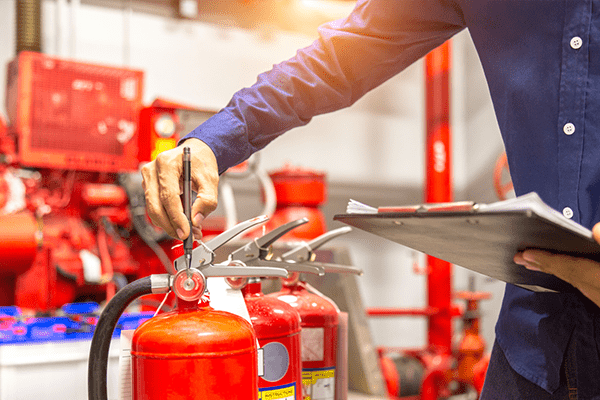
Snow and ice can create a winter wonderland outdoors, but freezing temperatures can wreak havoc on your fire protection systems. Fire sprinkler systems located along exterior walls can freeze without proper heating measures, potentially hindering water flow in the event of a fire. Additionally, cold weather brings lower humidity levels that increase the potential generation of static electricity. If left unaddressed, dry air that produces static shock can damage equipment or contribute to fires without proper preventative measures.
Ensure your sprinkler riser rooms have sufficient heat to prevent your system from freezing. Any system components, from smoke detectors to alarm systems, should be regularly checked for cold-related issues and malfunctions throughout winter. Maintain proper humidity levels in areas of your building susceptible to static shock. Above all else, ensure that sufficient fire extinguishers are placed throughout your facility to protect against fire hazards that can become an active blaze.
4. Keep emergency access points clear
Shoveling snow is no fun, but leaving it to build around your office’s exterior can be quite dangerous if it inhibits escape and rescue efforts. While it isn’t a direct fire hazard, leaving fire hydrants or emergency exits obstructed by snow could mean emergency rescue efforts are less efficient. Besides preventing first responders from fighting a fire, blocked entrances can make it extremely difficult for your building’s inhabitants to escape safely.
Any access points to your facility should remain unblocked, both inside and outside, to ensure that anyone inside can exit safely and quickly. Fire hydrants and other emergency resources for first responders should be cleared of snow, debris, and other matter that inhibits access. Consider marking these assets with flags or other indicators that will help direct emergency responders to them.
Fire safety is crucial, whether the weather outside is frightful or enjoyable. For business owners who want to improve their company’s fire safety capabilities, FSS Technologies is here to help. Our team of experts can assist you with installing and maintaining a fire alarm system customized for your business. We also offer fire safety system monitoring and inspections to ensure your system protects your employees and customers every hour of every day. Contact us today to get started.
Explore Our Other Blogs
Carbon Monoxide Detector Basics
What is a Carbon Monoxide Detector? Carbon monoxide (CO) is a colorless, odorless, and tasteless gas or liquid that is poisonous to humans. Detectors are designed to identify carbon monoxide leaks and warn those in your home or business. This advanced warning can save lives as it allows you to get outside as fast as…

Fire Prevention, Protection, and Suppression Systems
Fire safety is a crucial matter that every business should prioritize. Whether it’s caused by arson or an accident, a fire can cause catastrophic damage to a company’s property, inventory, and equipment if the proper protection measures aren’t in place or there are operational issues. In more unfortunate cases, insufficient fire safety standards can put…

Has Chicago’s CCTV System Helped Lower Crime Rates?
It’s been 19 years since the Chicago Police Department (CPD) kicked off its pilot of Police Observation Devices (PODs). Today, there’s a network of 50,000+ surveillance cameras in use all over the city. But Are They Working? This simple question has no simple answer. According to the Chicago Police Department, in some areas, narcotic related crimes…
What Does a Commercial Fire System Include?
Fire safety is critical for all businesses, but the components within commercial fire systems vary significantly between industries and functions. Fires can stem from common causes that affect any commercial property and sources unique to specific fields, so fire systems must address every threat using detection, prevention, protection, and suppression. With many options available for…
How Do Fire Sprinkler Systems Work?
Fire sprinkler systems work by detecting heat from fires and releasing water to extinguish them. Different components work together in various configurations to boost a structure’s fire and life safety measures. Learn how a fire sprinkler system works, what your options are, and why it’s a necessary investment for your business. What are the main…

Advantages of Having an Alarm System
There are a lot of advantages to having an alarm system. For starters, the National Council for Home Safety and Security says that homes without an alarm system are three times as likely to get burglarized. 3 Benefits of Alarm Systems Peace of mind Protecting your home from intruders is one of the most common…

Vacation-Proof Your Home
When planning a vacation, you are almost always considering what clothes to pack or booking a place to stay. But while you are away, you need to make sure that your home will be safe from burglars or thieves who may target an empty home. Before you pack up and leave for your vacation, there…

How Video Doorbells Work
A video doorbell is a system that allows you to see who is ringing your doorbell by way of a video connection. If your video doorbell has a two-way audio system, you also can talk to the person at the front door, whether you’re home or not. How you connect your system and how you…
Fire Systems for the Healthcare Industry
Healthcare facilities face uniquely complex life safety challenges and fire hazards. Unlike other commercial properties, hospitals, clinics, and long-term care centers must safeguard patients and protect equipment that’s both expensive and essential to life safety, and maintain 24/7 operations with no downtime. With vulnerable lives at stake, the healthcare industry must adhere to strict fire…
Motion Detector Installation Basics
Motion detection devices are a crucial component of any security system, commercial or residential. They allow owners to cover a relatively large amount of space with a small number of devices. Motion detectors also are known to detect activity that window sensors might miss. When it comes time to install motion detection devices, remember these…