Commercial Fire Extinguisher Compliance Guide
Fire extinguishers are one of the most visible fire protection tools in a building, and they’re often the first line of defense when a fire starts. But having extinguishers installed throughout a structure is only part of the equation. If a unit is blocked, missing a safety pin, damaged, partially discharged, or overdue for servicing, it may not be ready when a fire breaks out.
Building managers and business owners should be equally concerned with reduced readiness in emergencies and avoidable compliance failures during inspections. The good news is that both can be addressed with a clear, repeatable service plan. Keep reading to learn what commercial fire extinguisher services include, how service intervals typically work, and why they matter.
What are fire extinguisher services?
Fire extinguisher services refer to the inspection, maintenance, testing, and documentation practices that help keep portable fire extinguishers ready for use. The goal is straightforward: confirm the right extinguishers are installed for the hazards in the space, they’re accessible and in serviceable condition, and there’s clear documentation to support inspection readiness.
In a typical commercial setting, portable fire extinguisher service options may include:
- Selection: Review site-specific hazards to select extinguishers with agents such as water, wet chemicals, dry chemicals, carbon dioxide (CO2), clean agents, and foam.
- Installation: Ensure secure placement in the correct locations while meeting requirements for accessibility, travel distance, and visibility.
- Inspection: Identify visible issues early by confirming extinguishers are present, visible, accessible, and free of obvious damage or missing components.
- Professional maintenance: Verify operational readiness through a technician-performed service check, including proper tagging and required records.
- Testing: When applicable, confirm cylinder and unit integrity through periodic testing requirements that vary by extinguisher type and applicable standards.
- Recharging: Restore the extinguisher to a ready state after any discharge, even if it’s partial, and update documentation accordingly.
- Repair or replacement planning: Maintain continuous protection by recommending repairs or replacements when a unit is damaged, outdated, or no longer appropriate for the hazard.
- Documentation and reporting: Support audits and inspections with clear, organized records, especially for multi-tenant buildings and multi-site portfolios.
If there’s one misconception that causes problems during inspections, it’s this: fire extinguisher service isn’t just an annual event. A strong approach includes routine oversight, professional maintenance and testing, and records you can rely on—so your building stays protected, and your compliance requirements stay on track.
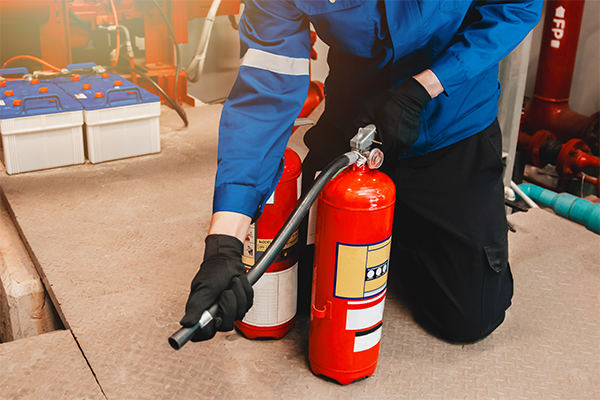
What standards apply to portable fire extinguisher services?
Commercial fire extinguisher requirements are typically driven by a combination of national standards and workplace regulations. Two of the most commonly referenced sources are NFPA 10 Standard for Portable Fire Extinguishers and OSHA 29 CFR 1910.157. These standards and regulations provide the backbone for selecting, placing, inspecting, maintaining, and documenting portable extinguishers.
NFPA 10 is a primary standard that covers topics such as:
- Selecting the appropriate extinguisher types for the hazards present
- Installation and placement considerations
- Ongoing inspection, maintenance, and testing expectations
- Recharging and recordkeeping best practices
OSHA 1910.157 addresses key workplace requirements such as:
- Employer responsibilities related to placement and condition
- Maintenance and testing expectations
- Employee fire extinguisher training and education
In addition to NFPA and OSHA, local enforcement and interpretation can vary based on your local Authority Having Jurisdiction (AHJ), such as a fire marshal or code official. Your AHJ may adopt specific code editions, apply local amendments, and set expectations for documentation or inspection practices. Check national standards and your local requirements to ensure you’re compliant in both areas.
What common issues are caught during fire extinguisher services?
A thorough fire extinguisher service program should catch small problems before they become bigger liabilities, such as failed inspections, missing documentation, or extinguishers that don’t perform in an emergency. Some issues are spotted during routine visual checks, while others can only be identified during professional maintenance, so using a combination of both is best practice.
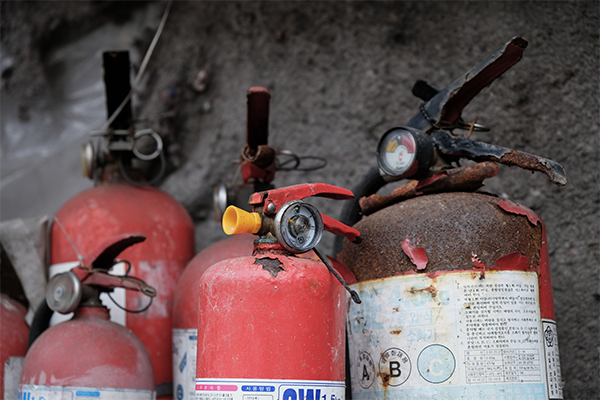
Here are some of the most common issues that fire extinguisher services help catch and correct:
- Blocked access or poor visibility: Extinguishers can’t do their job if they’re hidden behind storage, furniture, equipment, or locked doors. Even temporary obstructions can create compliance issues and delay emergency response.
- Damaged or missing components: Missing safety pins, broken tamper seals, cracked nozzles, or corroded cylinders can take an extinguisher out of service. These are often quick fixes, but only if they’re caught early.
- Evidence of use or partial discharge: Extinguishers that have been used, even briefly, typically need evaluation and recharging. A unit that looks “mostly full” can still be unreliable and raise red flags during an inspection.
- Overdue maintenance or missed service milestones: One common misconception is that a single annual visit covers everything. Portable extinguisher programs are lifecycle-based, and missed service is a frequent cause of compliance issues.
- Wrong extinguisher type for the hazard: If the fire extinguisher in a dedicated space doesn’t match the fire classes in that area, it can create safety gaps in the event of a fire and compliance concerns during a fire inspection.
- Missing or inconsistent documentation: Even if extinguishers appear to be in good condition and have regular visual checks, missing service tags and incomplete records can create compliance issues during audits and inspections.
How often do fire extinguishers need to be serviced?
Fire extinguisher services aren’t handled in a one-time annual appointment—they’re managed through a set of recurring checkpoints that help keep extinguishers ready for use and in compliance. Exact service needs can vary based on extinguisher type, hazards present, and local AHJ expectations, but most commercial operations follow the same general structure to keep their extinguishers in working order.
Here’s a high-level breakdown of how service intervals typically work:
- Monthly routine visual checks: Identify obvious issues early by confirming extinguishers are present, visible, accessible, and free of damage or missing components. These checks help prevent extinguishers from quietly falling out of compliance between service visits.
- Annual inspections and maintenance: Verify operational readiness by scheduling regular fire extinguisher inspections with a qualified technician. This is where service tags and documentation are updated, and where issues that aren’t always obvious at a glance can be identified and corrected.
- Periodic testing and deeper service: When applicable, confirm cylinder and unit integrity through testing and service requirements that vary by extinguisher type, agent, and environmental conditions. For example, certain extinguisher types may require hydrostatic testing on multi-year cycles.
- Recharging after any discharge: Restore extinguishers to a ready state after any use, even if the discharge was partial. Recharging typically involves inspecting for damage, refilling with the correct extinguishing agent, restoring the proper charge level, and updating service documentation.
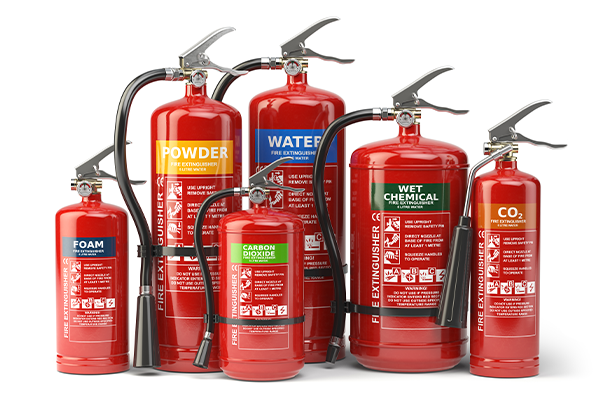
How do I choose the right fire extinguishers for my business?
Fire extinguisher services keep you compliant over time, but compliance starts with having the right types installed in the right places for your operations. Being intentional about your selection is a core part of helping your business stay ready for emergencies and inspections. Here are the three most important questions you should consider when selecting portable fire extinguishers for your business.
1. What fire hazards are present?
Different spaces within the same building pose varying fire risks. Offices, maintenance rooms, breakrooms, and commercial kitchens don’t share the same hazard profiles. Manufacturing areas with flammable liquids, electrical equipment, or combustible materials may require specialized extinguishers. Not every area can be protected the same way, so determine which types of fire extinguishers can address each hazard.
2. Where do extinguishers need to be placed?
Once you know the hazards, placement is the next piece of the puzzle. Extinguishers should be installed where they’re easy to see and can be reached quickly when needed. Placement also needs to account for how people move through the space and how often the layout changes, since many inspection issues stem from extinguishers being relocated, blocked, or overlooked after a renovation or relocation.
3. Are there additional standards that apply to my industry?
Beyond NFPA 10 and OSHA 1910.157, additional codes may affect your building’s portable fire extinguisher standards and expectations. In certain industries, requirements in NFPA 1 Fire Code, NFPA 101 Life Safety Code, and other adopted codes may be reinforced by regulators and local AHJs. Work with a qualified provider to ensure your extinguisher selection and placement align with industry standards.
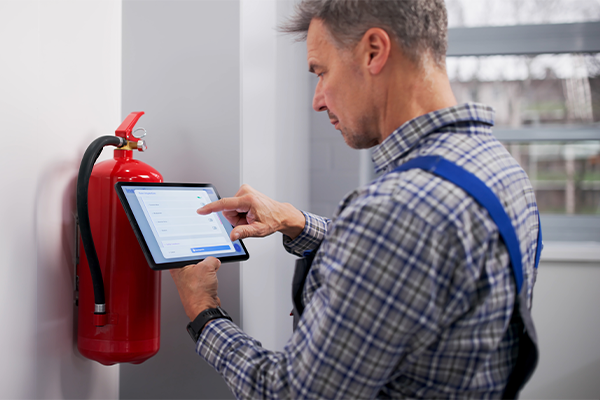
When should I work with a fire extinguisher service company?
Even with strong internal safety routines, most businesses benefit from partnering with a qualified fire extinguisher service company for professional maintenance, periodic testing, and clear documentation. If you’re not sure what’s needed, an inventory review and on-site assessment can establish a precise baseline for your organization and outline actionable steps for service and compliance.
Here are a few big-picture signs it’s time to bring in a professional:
- You want confirmation that your extinguishers match your risks: If you’re not sure whether your current extinguishers align with the hazards across your facility, a service provider can review your operations and help verify extinguisher selection and placement.
- You need stronger documentation and inspection readiness: If service records are inconsistent, hard to locate, or spread across sites and teams, professional servicing can help re-establish clear, organized documentation that supports audits and inspections.
- Your business is changing, and you want to stay ahead of compliance: Growth, new equipment, new processes, new tenants, and facility changes can all shift fire risks over time. A provider can help reassess your extinguisher needs as your environment evolves.
- You’re operating in a regulated or higher-risk environment: If your industry has additional oversight (or you’re subject to recurring inspections and compliance audits), working with a qualified provider helps ensure your extinguishers stay aligned with the standards you’re held to.
- You manage a multi-site or multi-tenant portfolio: The more locations, extinguishers, and occupancy types involved, the harder it is to maintain consistent service and records. A service partner can help standardize scheduling, reporting, and corrective action so nothing slips through the cracks.
Build a stronger fire extinguisher service plan with FSS Technologies
Portable fire extinguisher compliance is much easier to manage when you’re not piecing it together from scattered records, old service tags, and best guesses. If you’re unsure whether your current extinguishers still match the hazards in each area, whether service milestones are being tracked consistently, or whether recent changes to your facility have affected placement, a qualified life safety partner can help.
At FSS Technologies, our team of NICET-certified technicians supports businesses with portable fire extinguisher services built around readiness and documentation. If you’d like help completing an inventory review and on-site assessment, correcting gaps, or setting up ongoing service that stays aligned with NFPA and OSHA expectations, contact our team to get started.
Explore Our Other Blogs

Are You a Spectrum Customer Losing Service?
When Spectrum closed the doors on its home security system business in February 2020, many customers were left high and dry. The Spectrum Backstory Spectrum is a subsidiary of Charter Communications, the second-largest cable provider in the country offering service in 42 states. Charter inherited Spectrum in a 2016 merger with Time Warner Cable and Bright House…

Why Night Staff Should Have Fire Alarm Training
In the years that I traveled as a Sales Representative, I experienced many times when a fire alarm would go off throughout the night. As the hotel guests evacuated, I often found that the night staff didn’t know what to do. In almost every case, it was an accidental alarm, and in many cases, night…

Smoke Detectors for the Hearing Impaired
What are Visual Fire Alarms? If a fire breaks out, occupants of a building may have as little as two minutes to get out before the fire becomes life-threatening. Fire alarms provide an early warning notification and alert people to evacuate, but what if you are deaf or hearing impaired? How do you know there…

How to Maintain a Commercial Security System
Updated May 2023 With the latest advances in security technology, it’s becoming easier for small businesses to find a security system that works for their needs. Whether your business just installed your commercial security system or has been utilizing security measures for some time, proper maintenance will increase the life of your system and provide…
What are the Components of a Security System?
Security systems can vary widely in size and scale: from simple home alarms and small business surveillance systems to commercial-grade intrusion and detection systems. One system could even be comprised of enterprise-level networks that stretch across multiple locations. Understanding the essential components of a security system is the best way to start your search for…

Theft Prevention Tips for Businesses
Theft, unfortunately, can take a wide variety of forms. Theft in a retail business might include the loss of physical property from shoplifting or can come in the form of embezzlement. In the retail sector, a 2019 National Retail Security Survey reported the average cost per shoplifting incident is $546.67. According to the 2018 Hiscox…
Security Cameras Are Not Created Equal
The Difference in Security Cameras Cameras are one of the most critical components in your security arsenal, and not all security cameras are the same. Why you ask? Consider these differences: Various types and sizes of cameras Indoor vs. outdoor cameras Cameras that are easy to camouflage Cameras that provide high-quality video footage Wired cameras vs. wireless…

How Video Doorbells Work
A video doorbell is a system that allows you to see who is ringing your doorbell by way of a video connection. If your video doorbell has a two-way audio system, you also can talk to the person at the front door, whether you’re home or not. How you connect your system and how you…
Where Should Fire Alarm Pull Stations Be Located?
While they generally go unnoticed until a moment of need, fire alarm pull stations are an integral part of a business or large residential building’s commercial fire system. What is a fire alarm pull station? As opposed to a smoke detector or sensor, human intervention activates a manual pull station and is the catalyst for setting…
Addressable vs. Conventional Fire Alarms
When determining what type of fire alarm systems are best for your business, it boils down to your choice between a conventional and addressable alarm system. The combination of smoke, heat, and carbon monoxide detectors work together with your control panel to keep your business safe. Additionally, you will need to determine what kind of automatic…