What to Know About Smart Locks
Smart locks have been on the market for several years and continually gain features as technology advances. Learn how useful they can be and how to find the best option for your home or business.
What’s a smart lock?
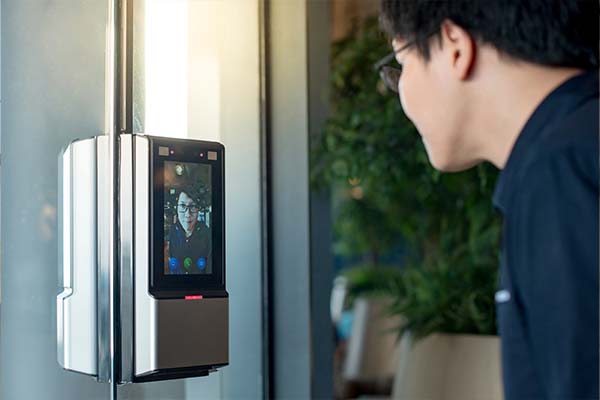
Smart locks are door locks controlled digitally. These locks can be monitored and controlled by an app, phone call, code, key fob, or biometric data. Users can fully control access from wherever they are as long as they have an internet connection. Smart locks are used in a variety of ways for both residential and commercial properties. Some brands even offer automation, voice activation, and control through virtual assistants like Amazon Alexa or Google Assistant.
How do smart locks work?
In most cases, smart locks either attach to or completely replace a door’s deadbolt and traditional lock. Smart lock installation is usually minimal; some versions don’t require installation tools. Once physically installed, users finish setup using Wi-Fi or Bluetooth.
Features
As previously mentioned, many smart locks involve control from a smartphone app, numeric codes, key cards, or even biometric data like fingerprint scans. Other popular features include:
- Mobile alerts for activity
- Video cameras and microphones
- Custom user access codes
- Remote access to lock and unlock
- Emergency sirens
- Anti-theft features
- In-app panic buttons
- Traditional key backup
Choosing the right smart lock depends on what features best fit your lifestyle and needs. For instance, some smart locks allow for multiple profiles or guest access, and someone with children might want their babysitter to have their own personal or temporary code.
Connectivity
The key to smart locks is their connectivity. Smart locks primarily connect in one of three ways:
- Wi-Fi: This is the most popular option, as most businesses and homes have the Wi-Fi network needed for a lock to operate. These types of locks can be accessed from virtually anywhere.
- Bluetooth: This type of lock connects directly with your smartphone, tablet, or computer; however, this connection isn’t as robust since Bluetooth connections don’t accommodate remote access control.
- Z-Wave: These locks typically connect to a hub installed on the user’s Wi-Fi router instead of directly to the user’s phone. These types can also be accessed remotely.
Potential issues
The most significant downfalls of smart locks often revolve around technical issues. They all require a power source through a battery pack or direct wiring to a building or home. Technical problems and malfunctions could arise if the power supply becomes disrupted. The same goes for the Wi-Fi and Bluetooth aspects. If you commonly suffer from technology woes, choose a lock with a manual-key backup.
Smart locks with FSS Technologies
FSS Technologies is a proud provider of various smart lock options. We work with three main providers of commercial access security solutions that incorporate smart locks. These providers work well alone, but can also integrate with each other for more comprehensive solutions:
- Avigilon Alta is the industry leader in commercial access control with modern hardware and software that accommodate contactless access, remote management, flexible credentials, and more.
- Livly is a property and tenant management system that involves access control with a mobile key system for residents and guests.
- Savance Workplace is a workforce management solution that enables employers to manage employees and visitors with access badges, temporary passes, and more.
The convenience and safety factors associated with smart locks have contributed significantly to their popularity and widespread implementation. FSS Technologies can complete a thorough assessment of your business and create a tailored solution that best fits the needs of you, your employees, and your customers. Contact our security experts for a consultation on the best smart locks to add to your security system.
Explore Our Other Blogs

3 Ways to Prevent Shoplifting
Preventing shoplifting is a big deal if you’re a retailer. According to the 2018 National Retail Security Survey, shoplifting continues to be the leading cause of inventory loss for retailers. Loss of stock is a big deal in this country to the tune of nearly $47 billion. The survey also identifies the top ways retailers try…

Hard-Wired vs Wireless Security Systems
The chicken or the egg. Not asking which came first in this case, just which one you like better. In the world of security systems, which came first between wired and wireless was answered long ago. But the question of which is better remains. Let’s start with a quick overview of how each of these…
Cost of Home Security Systems
Getting a security system for your home is a wise investment. While the obvious benefit is protection for your family, home, and belongings, it’s hard to put a price on the peace of mind that comes from knowing that you and your family will have professional help in case of an emergency. Still, you must…
What are the Best Outdoor Security Cameras?
Outdoor security cameras do more than record what happens around a property—they help you see clearly, respond faster, and document events when you need answers. Whether you’re protecting your home’s front porch and driveway or monitoring your company’s parking lot, loading dock, or perimeter gate, the “best” outdoor security camera is the one that fits…
Wired vs. Wireless Security Cameras
Wired or Wireless? When we talk about wired versus wireless in-home security, it has little to do with whether a piece of equipment has physical wires attached to it. The terms wired and wireless refer to the communication signal that is transmitted from one piece of security equipment to another. For a security system to…

Alarm Monitoring Services: How They Work
An ear-piercing siren and flashing strobe lights create an immediate sense of emergency and indicate an alarm of some sort has been triggered. Now that the alarm has been triggered and the warning sirens have sounded, what happens next? If you have a monitored security system, it won’t just be the neighbors or passerby alerted to…
What is the Difference Between Analog and IP Cameras in a CCTV System?
When you are considering different security systems and potentially implementing surveillance cameras into your home or business, a big question is whether you want IP or analog cameras. Global Market Insights estimates that the IP camera market will be worth more than 20 billion by 2025. With today’s technology both IP and analog systems can be viewed…
Code Requirements for Commercial Fire Alarms
The International Code Council The purpose of commercial property is for business or retail use, and the International Code Council (ICC) is a nonprofit association that develops model codes and standards used worldwide to construct safe, sustainable, affordable, and resilient structures. The fire codes vary depending on the type of business you run. For example,…

The Top 5 Reasons Why Your Smoke Alarm Is Beeping
One of the most critical components of any fire safety plan is the humble smoke alarm. Yet, few things are more disruptive (and potentially alarming) than a smoke alarm that won’t stop beeping. Whether you manage a bustling office, run a multi-unit residential property, or hear smoke detector beeps in your own home, understanding why…

Will CCTV Work Without Internet?
Closed-circuit television (CCTV) is a TV system where the signal isn’t publicly broadcast but is watched and monitored, usually for surveillance and security purposes. From city streets and highways to retail stores and banks, CCTV cameras are placed in most places to protect property and deter crime. Learn whether a commercial CCTV system can work…