Smart Home Security & How to Implement
Home Security Paired with Home Automation
Security vs. home automation is the friendliest rivalry around. Why? Because they play so well together.
Security systems used to have a singular focus—keeping unwanted people out of a house. But as technology evolves, security equipment placement throughout the home for protection performs a dual purpose: Helping homeowners with everyday tasks.

The most common reason homeowners invest in home automation tools today is for home security.
A smart home is a home that uses automation to control certain functions of the house. The smartphones in our pockets are the fastest and easiest way to control almost everything in our lives using an internet connection.
Below are some examples of how smartphones can connect us to our home security.
- Homeowners can arm and disarm their home security systems from their smartphones rather than entering a code on a physical keypad on the wall.
- If a sensor on a home security system is tripped, homeowners can receive automatic alerts.
- Remote video monitoring allows homeowners to log in on a smartphone app and view the footage so they can see what’s going on.
- If a visitor rings the doorbell, homeowners can decide whether to get up to answer it.
- If a security system is equipped with two-way audio, the homeowner can talk to the person at the front door.
- If a homeowner needs to let someone into the house, a click of a button unlocks the front door.
The uses for automation in home security go on and on. As smart home technology advances, machine learning and sensor intelligence can even spot activity before it spells trouble. For example, the garage door opens at 1:00 p.m. on a weekday when it usually never opens; the homeowner can receive an alert letting him know that something out of the ordinary is occurring.
After home security, saving energy is the most popular reason to install smart home technology.
Take the thermostat, for example. A smart thermostat allows a homeowner to control the home’s temperature from an app on their smartphone. Additional sensors placed throughout the home can send information to the thermostat telling it when there is activity in the house or when there is not, so the thermostat can shut off automatically if no one is in the house.
A smart thermostat can learn a family’s living patterns and automatically adjust the temperature at times when the family is in and out of the home. When the thermostat senses the smartphone that controls it moving closer home, it can adjust the temperature, so the homeowner is comfortable when she arrives.
Light bulbs, switches, and plugs can all be automated, too, as part of a smart home energy solution. Lights can turn off automatically when the homeowner leaves, or an app can be used to shut off the coffee pot forgotten about that morning.
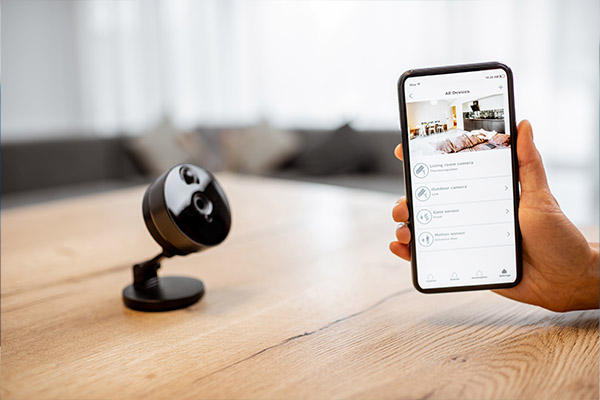
Smart devices for home security or home automation should work together with other devices seamlessly. Compatibility is a big issue when it comes to smart home technology. Homeowners who buy different devices, apps, and hubs from various manufacturers may run into issues where one device doesn’t work well with another. As they add more pieces to the smart home, the problems can compound.
If you want to build a complete home security and automation system, it is in your best interest to consider a whole-home platform like Alarm.com. It powers all the devices in your home, so they work together without the need to program or configure anything.
While smart home technology makes your life easier, installation without professional assistance can be tricky. Take the smart home thermostat, for example. Are you familiar with heating and cooling systems and confident with electrical wiring? Incorrectly installing a smart thermostat can seriously damage your HVAC system.
At FSS Technologies, we are committed to making life safer and more convenient through home security and home automation solutions. Contact us for a free, in-home consultation.
Explore Our Other Blogs
When Is Automatic Fire Detection Required?
A fire detection system is a good idea for your property, and many insurance companies offer discounts based on your level of protection. While not required in your private residence, the law does require automatic fire detection in a wide array of other facilities. Local Building Code Requirements Your state’s building code will spell out…

3 Ways Security Contracts Help You
Are Contracts Required with All Security Companies? No. Not all security companies require a contract, but that doesn’t necessarily mean a no-contract company is a better option. There are pros and cons to contracts. The key is to know what you are paying for in a contract and details about the reputation of the company….
How Security Cameras Work at Night
Security Camera Night Vision Light is crucial for a camera to work. Without light, the camera can’t see anything, so how do security cameras work at night? Infrared radiation (IR), or infrared light, is a type of electromagnetic radiation that is invisible to human eyes. It is essentially energy, a heat, that all objects emanate….

5 Reasons Why You Need a Home Security System
A home security system protects your home and the ones you love. While there are many reasons you may need to invest in a home security system, we have highlighted some key ones: 1. Peace of Mind Have you heard a noise in the night and ever wondered what made the noise? A home security…
What Does a Commercial Fire System Include?
Fire safety is critical for all businesses, but the components within commercial fire systems vary significantly between industries and functions. Fires can stem from common causes that affect any commercial property and sources unique to specific fields, so fire systems must address every threat using detection, prevention, protection, and suppression. With many options available for…
How Much Data Does a Wifi Security Camera Use?
Internet Speed Bandwidth Internet bandwidth is a significant issue nowadays. Everything is tapping into the internet— from our phones to our refrigerators. If you’re installing internet protocol (IP) security cameras, they will inevitably use some of the bandwidth from your network. The question is, how much? When you purchase home internet service, you typically get…

Monitored vs. Unmonitored Security Systems
If you’re thinking about installing a security system, you may be wondering if monitoring is a necessary feature. While an unmonitored system is better than nothing at all, there are some critical things you should consider before making a decision. The Benefits of Monitoring The noise and commotion caused by the sirens and lights associated…
Can Motion Sensors be Triggered by Light?
Motion sensors are a common part of our world today. Wave your hand under the faucet and the water runs. Pull open the closet door and the light turns on. Walk near the doors of the grocery store and they automatically slide open. Motion sensors are devices that detect movement. They are common features in…

How is a Fire Sprinkler System Designed?
While fire sprinkler systems seem the same at first glance, there’s no one-size-fits-all solution for all commercial properties. Depending on a structure’s needs and circumstances, fire sprinkler systems use different combinations of various components. The ideal design should accommodate the unique features of each industry, layout, and operation. Whether you’re looking to install a fire…
Kidde: Innovations in Fire Safety
Your fire alarm system can protect your family, home, and belongings from fires, gas leaks, and other hazards. FSS Technologies is committed to providing its customers with top-of-the-line fire safety and emergency prevention technology, which is why we are a proud provider of products from Kidde, North America’s most installed fire safety brand. Learn about…