Most Common Causes of House Fires
A house fire can be a life-altering event that some may never fully recover from. The best way to protect your home and family from a fire is to educate yourself about the risks and how to prevent them.
We all know the essential forms of prevention and protection, like smoke detectors, fire extinguishers, sprinklers, and home monitoring. However, there are additional steps that homeowners can take as the first line of defense against house fires. While our list is not exhaustive, it should give you an idea of things to avoid and where to exercise caution.
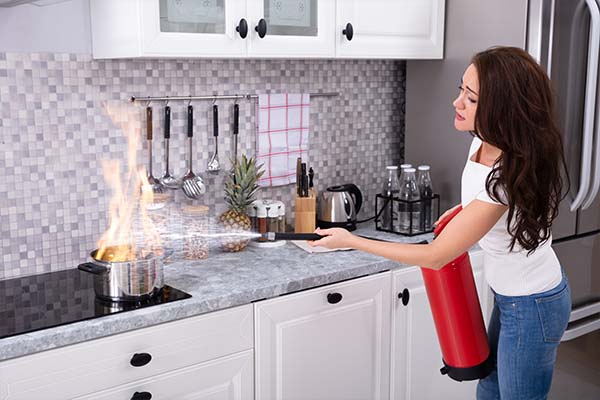
One of the most prominent causes of a house fire is cooking. The inherent danger of cooking with open flames comes with the rise in popularity of natural gas appliances. According to the most recent Home Structure Fire Report from the National Fire Protection Association (NFPA), cooking accounted for approximately 49% of all house fires from 2016 to 2020. The importance of safe cooking practices and knowing how to react appropriately if an incident occurs could be a game-changer in protecting your home.
These are some of the best practices to follow when cooking:
- Never leave the oven or stove unattended.
- Keep all combustible items at a safe distance from heat sources.
- Keep cooking equipment clean.
- Turn any pot or pan handles toward the back of the stove to avoid accidentally knocking them onto the floor.
- Keep a fire extinguisher nearby.
- If a grease fire occurs, remove the heat source and cover the fire with a lid or generous amounts of baking soda – never use water.
Household heating measures like wood-burning stoves, fireplaces, or portable space heaters can easily lead to fires if improperly used. In 2021, an NFPA report showed that heating equipment caused one in seven home fires and accounted for 19% of home fire deaths. Following proper protocol for venting, cleaning, and spacing any heating appliances is essential. Wood-burning fireplaces can be quite dangerous if not properly respected. Here are a few things to keep in mind:
- Only burn prepared or seasoned firewood with low moisture content.
- Never use flammable liquids or other chemicals to jumpstart fires.
- Never leave your fireplace unattended while in use.
- Store firewood properly in between uses.
- Practice proper cleaning and maintenance on your fireplace, chimney, and chimney cap.
Space heaters usually include instructions and safety warning labels that have been appropriately tested and recommended. Follow these guidelines to avoid misuse and potential fires:
- Remember that heaters that use a fuel source like kerosene are more likely to cause issues.
- Plug space heaters directly into a wall outlet.
- Keep heaters at least three feet away from furniture, walls, or anything that can burn.
- Do not place heaters near stored liquids or wet areas.
- Turn off and unplug heaters when not in use.
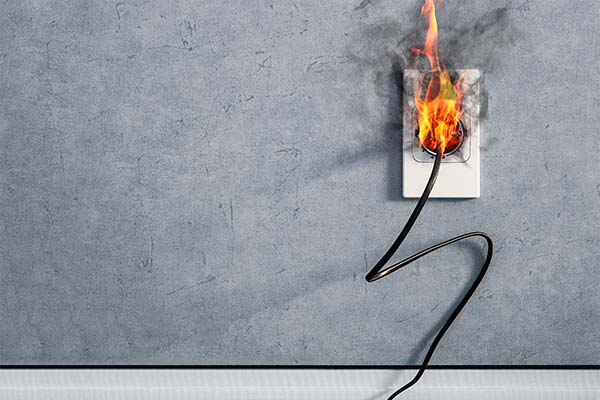
Malfunctions within a home’s electrical system are another common cause of house fires, accounting for around 9% of total reported structure fires. Be sure to have your home thoroughly inspected before purchasing it, and schedule regular checks to ensure your continued safety. A qualified electrician should do all electrical work in your home.
Along these same lines, electrical fires are known to increase during the holiday season as homeowners set up their decorations. Inspect all powered décor to confirm plugs and wires are in good condition.
Whether it’s a holiday or an average day, these tips can help you prevent electrical fires:
- Plug appliances of any size directly into wall outlets.
- Never use an extension cord with a major appliance.
- Unplug small appliances when not being used.
- Do not overload wall outlets or power strips.
While smoking only accounts for around 5% of reported structure fires, it has been linked to approximately 9% of fire-related injuries. An even more concerning fact is that smoking and smoking materials accounted for 24% of fire-related deaths from 2016 to 2020. Traditional smoking devices like cigarettes, cigars, and pipes all involve a smoldering flame with inherent dangers. Since they often use smoking to relax, smokers have been known to fall asleep before properly extinguishing their method of choice.
These tips can help smokers prevent fires:
- If you have to smoke, smoke outside.
- Never smoke in a home where oxygen is being used.
- Keep lighters and matches out of reach of children.
- Use deep, wide ashtrays that can completely douse any lit smoking materials.
Candles might seem relatively harmless but can pose a severe fire threat if mishandled. According to the NFPA, around 20 home candle fires are reported daily. Even though their light or aroma can create a relaxing and peaceful atmosphere, remember that candles involve an open flame that could quickly get out of control.
Here are several ways to avoid candle fires:
- Keep candles at least 12 inches away from anything flammable.
- Never leave a lit candle unattended.
- Ensure your candles are housed in stable holders and locations that cannot be knocked over easily.
- Use flashlights instead of candles during a power outage.
- Consider battery-operated candles or fragrance diffusers as alternatives that do not require open flames.
Protecting yourself
Proactively identifying and avoiding fire risks is ultimately your best safeguard from a house fire. If you and your family could benefit from added protection, the fire and security experts at FSS Technologies can provide an initial consultation, help you develop an actionable family emergency plan, and expose any potential hazards you might have missed. With options for alarm systems, monitoring services, and detectors from trusted brands like Kidde, our professionals can outfit your home with a fully customized fire and security solution to give you around-the-clock peace of mind. Contact us today to get started.
Explore Our Other Blogs

Home Security Solutions for People with Disabilities
According to the Centers for Diseases Control and Prevention (CDC), one in five American adults live with a disability. The most common disabilities are hearing or vision impairments, mobility issues like arthritis or a diminished ability to live independently, speech and language challenges, and cognitive conditions including dementia and Alzheimer’s disease. Recently we talked about…
How Much Data Does a Wifi Security Camera Use?
Internet Speed Bandwidth Internet bandwidth is a significant issue nowadays. Everything is tapping into the internet— from our phones to our refrigerators. If you’re installing internet protocol (IP) security cameras, they will inevitably use some of the bandwidth from your network. The question is, how much? When you purchase home internet service, you typically get…
What are the Components of a Security System?
Security systems can vary widely in size and scale: from simple home alarms and small business surveillance systems to commercial-grade intrusion and detection systems. One system could even be comprised of enterprise-level networks that stretch across multiple locations. Understanding the essential components of a security system is the best way to start your search for…
ADT Home Security Settlement
ADT home security is facing a class-action lawsuit. The plaintiffs allege that ADT failed to disclose wireless sensors’ vulnerability to evasion and jamming. Why should you care? Although this settlement is for ADT, this is a vulnerability all wireless security systems face. Let’s talk about wireless technology for a second. All home Wi-Fi networks are…
How to Prepare for a Fire Inspection
Updated May 2023 Most people learn how to react to fire alarms from a young age. The sharp, jarring noise of the sirens instantly notifies everyone within earshot of a possible emergency and the need to evacuate. These fire safety alarm systems are mandated worldwide and need regular inspections and maintenance to promote safety. As…

DIY Home Security Cameras
DIY Security Systems Are the New Fad There are many pre-configured, DIY home security system kits on the market. They are sold under various brand names including Ring, Nest, SimpliSafe, and others. The basic idea of a DIY home security system is that you pay one low fee to purchase all of the equipment and…

How Does Fire Alarm Monitoring Work?
According to the National Fire Protection Association (NFPA), there is a fire reported in the United States every 23 seconds. If a fire occurs in your home or business, you want to be notified right away. You might be asking yourself, so how does this work? How can I ensure I am protected at all…

Fire Safety Procedures for the Workplace
The bad news—a fire breaks out in your workplace. The good news—you are ready because you have done your homework and prepared for the possibility of an emergency. Emergency Action Plan The Occupational Safety and Health Administration (OSHA) requires most employers to have an emergency action plan for various scenarios, including fires in the workplace. There are…

5 Ways Your DIY Security System is Failing You
In the digital age, DIY projects are the rage in all things, including home security. People turn to DIY home security because it seems easy and can save you a few bucks. Unfortunately, you really do get what you pay for if you choose a DIY security system. Whether you are a homeowner, a business owner, or…
Dome vs. Bullet Cameras: Key Differences
Security cameras are an integral part of a security system in any home or business. They give you access to a video stream of what is happening inside a building or on your property while also giving the owner the ability to look back on footage if necessary. There are many different types of CCTV cameras out…