How Your Internet Speed Affects Your Security System
Internet speed is a precious commodity in today’s connected homes. Internet speed is responsible for how quickly or slowly data moves from the internet to the application on your computer.
Things like your mobile phone, television, computer, gaming system, and even appliances use the internet. And your home security system probably does too. The average family household could have three to four smartphones, a couple of televisions, Bluetooth speakers, multiple computers, and maybe a gaming console all using internet bandwidth at the same time!
Measuring Internet Speed
Internet speed is measured in units called megabits per second (Mbps). Megabits per second is defined as how many bits of data travel to and from your home each second.
1 Mbps = 1 million bits of data per second
This is not to be confused with megabytes (MB), which usually refer to the size of a specific file, not the speed it travels. There are eight bits in a single byte, which means if you want to transfer a 1MB (megabyte) size data file from your hard drive to the internet, you need an internet upload speed of at least 8 Mbps (megabits per second).
You may also have heard of gigabits.
1000 Mbps = 1 gigabit per second (Gbps, Gb/sec, or Gb/s)
Upload and Download Speeds
There are two types of internet speed that you are provided by your internet vendor—upload speed and download speed—and they are usually not the same.
Upload speed is how fast your device can send data to the internet. Download speed is how fast your device can receive data from the internet. Most residential internet providers have much faster download speeds than upload speeds because most of us are downloading music and TV shows from the internet. If you’re a gamer, however, and you frequently use cloud-sharing apps for data storage, you may want to look a little more carefully at a provider’s upload speed. In the same way, if you have home security cameras transferring data to be viewed on a smartphone app, you also need to have better upload speeds.
The FCC provides this handy broadband speed guide to help homeowners estimate what type of download speed they might need in their home, depending on what type of devices and how many devices are accessing it.
Security Components Using the Internet
Many of today’s home security systems feature components that also rely on an internet connection for transmitting data.
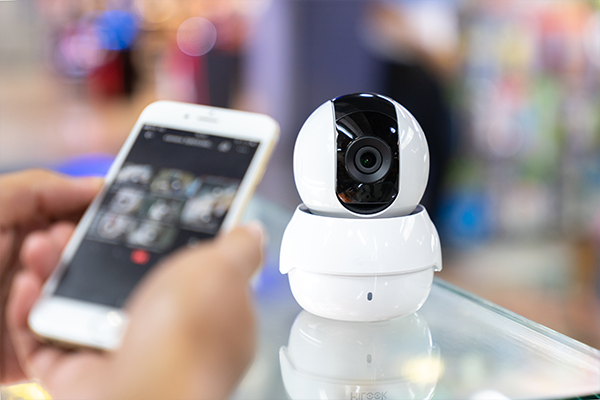
Indoor and outdoor security cameras may use your home’s Wi-Fi connection to transmit video to your smartphone or another recording device. Door and window sensors may use Wi-Fi to transmit alarm signals. Connected smoke detectors and carbon monoxide detectors can use Wi-Fi to send an email or text alert as soon as they detect smoke, even if you are not at home.
Many people think that because they have an “unlimited data” plan, it means their security system will run with ease, but that isn’t true. As we learned earlier, how much data you can transfer in MB is not the same as the speed in which that data can travel.
The reason prices go up on the internet is because what the companies are charging you for is your upload and download speeds. A typical home internet service package may come with 3 Mbps of upload speed and 25Mbps of download speed. Internet packages with more than 200 Mbps of download speed are often referred to as “fast,” and once they get above 750 Mbps of download speed, they might be called a Gigabit service.
How Much Speed Do I Need?
Is a typical home internet service package enough speed to operate all the connected devices in your home, plus your security system? If you have multiple wireless cameras operating as part of your security system, it may not.
The minimum recommended upload speed is 1Mbps for a remote connection on most security cameras. This is for a single camera. If you are using multiple cameras, you need to multiply this by the number of cameras you have. If you are using a high-definition camera, the upload speed required per camera is more like 2.5Mbps.
What happens if you don’t have the internet speed needed to support your cameras? The cameras won’t work, although there are some cameras that can also record video locally to an attached USB device or SD card so they will still record video footage without a Wi-Fi connection. But you definitely won’t be able to view the video footage on your smartphone, or you will experience extremely poor video or audio quality.
What happens if you don’t have the internet speed needed to support other components on your security system? It depends on how your system is set up. For example, if your security monitoring company uses the internet to receive alarm signals from door or window sensors, they will no longer be able to receive them. If you want to control door locks remotely from a smartphone app, you will not be able to.
Signal Strength vs. Speed
In addition to internet speed, signal strength can also be an issue for wireless security system components. You may have the speeds you need, for example, but you are still getting error messages that your video doorbell is not connected.
Two possible reasons for this are:
- The video doorbell is located too far from your internet router.
- There is some other obstruction that is preventing the internet signal coming from your router to reach the security system component it is supposed to be powering.
There are numerous ways to remedy all these issues so you can enjoy a reliable and safe home security system. Still, it is not always as easy as television commercials want you to think it is. If you are interested in talking to a professional security company about all the options available for your home, contact FSS Technologies today for a free evaluation.
Explore Our Other Blogs
Why Fire Sprinkler, Extinguisher, and Backflow Inspections Matter
At FSS Technologies, we believe that safety isn’t a luxury—it’s a necessity. Our commercial fire protection services are designed to give your business peace of mind, knowing that your properties, people, and assets are secure and compliant with fire and life safety codes. We specialize in fire sprinkler systems, fire extinguishers, and backflow preventer inspections…
Avigilon Alta: The Industry’s Leader in Commercial Access Control
With the rise in popularity of hybrid workspaces and flexible scheduling, more business owners are turning to access control systems to secure their investments. Not only are access control systems the latest standard for commercial security, but FSS Technologies is a proud partner with Avigilon Alta, the leading access control system manufacturer. Why Avigilon Alta?…
What are the Different Types of Smoke Detectors?
Smoke detectors are vital to fire safety for homes and businesses. Because they protect lives from fires or gas leaks, it’s essential to choose the best detector for your environment. There are various options to choose from, meaning you need to understand the benefits each one offers before making a selection. Learn more about the…

Choosing a Safe Neighborhood in Chicago
There are a lot of great places to live in Chicago. From the historic vibe of Printers Row to the ultra-stylish River North, there are neighborhoods to fit every personality. But are they safe? It turns out, many of them are. According to Niche.com—which ranks neighborhoods based on crime, schools, cost of living, etc.—the short commuting times…
Ring Doorbell Cons
Video doorbells are a great addition to home security, and Ring is the popular choice for many who prefer wireless security. Although there are some pros to the Ring Doorbell, it has some cons you should be aware of before purchasing from Ring. Monthly Fee for Storage The cheapest Ring doorbell is $59.99, with the…
What is a Manual Pull Station?
A manual pull station is a wall-mounted fire safety device that triggers an alarm in the event of an emergency. Pull stations are commonly found in many public buildings across the United States and Canada. Most people have seen them, and some have possibly even pulled one before, whether for a real emergency or a…
What Is a Central Station Alarm?
A central station alarm system is one that feeds directly into a central monitoring station. If a sensor on the central station alarm system is triggered, such as fire, smoke, C02, or burglar, the system does much more than just set off a loud siren or send an email alert telling you to log into…
How Often Should You Check Your Smoke Detectors?
Fire Alarm Testing Whether your fire alarm is protecting your home or a commercial facility, regular testing of your fire alarm system is critical to ensure it is working correctly. This test guarantees that everyone occupying the home or office understands what to do when the fire alarm sounds, gives you a chance to check…
Can a Security System Save My Business Money?
If you’re a business owner, you know the importance of weighing the pros and cons of major purchases before making them. A commercial security system is one of the higher-ticket items that can cause the most significant hesitation. While they can take large investments to purchase, install, and maintain, security systems can offer long-term savings…

What Is an Area of Refuge?
Area of Refuge Systems An area of refuge, also known as an area of rescue assistance, is a place within a building where people can safely wait for rescue and call emergency responders for help. An area of refuge is part of U.S. federal law, enacted in 1990 as part of the Americans with Disabilities Act….