Where Should Smoke Detectors Be Placed?
Smoke Detector Placement
Fire can spread extremely fast. In just minutes, a building can be fully engulfed in flames. Smoke detectors are critical to give people inside homes and commercial buildings early warnings so they have time to get out. Proper smoke detector placement is also key when it comes to keeping your home or business safe.

Residential Smoke Detector Placements
At a minimum, The National Fire Protection Agency (NFPA) recommends that smoke detectors be placed:
- Inside every sleeping room
- Outside every sleeping room
- On every level of your home, including the basement
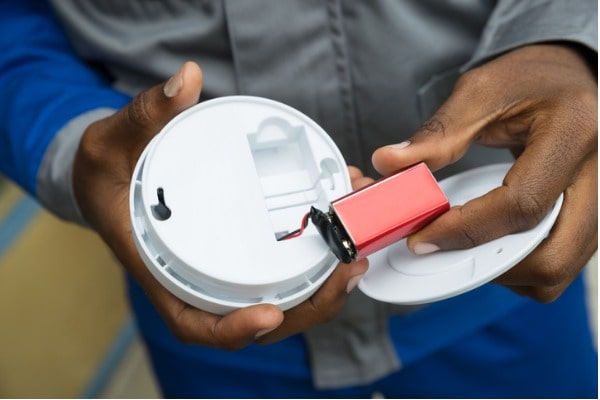
Additionally, the NFPA recommends the installation of smoke alarms near the stairways leading to different levels of your home and at least 10 feet from cooking appliances. The NFPA also suggests interconnecting all smoke alarms, so when one alarm sounds, they all sound. This can be done with hard-wiring or wireless technology. It’s recommended that you test your smoke alarms at least once a month and replace them every 10 years. Dead batteries caused one-quarter (26%) of the smoke alarm failures
There are two types of smoke alarms that are used in residential homes – ionization and photoelectric. For the best protection, a combination ionization-photoelectric warning, known as a dual-sensor smoke alarm, is recommended. Make sure the detector is approved by Underwriters Laboratories (UL), which sets strict testing and safety requirements.
Commercial Smoke Detector Placements
In commercial buildings, the location of smoke detectors are set by the Authority Having Jurisdiction (AHJ). The AHJ is defined as the organization, office, or individual responsible for enforcing the requirements of a code or standard, and for approving equipment, materials, installation, or a procedure.
Fire codes and standards are based on the codes and standards of the NFPA. However, there can be many differences between AHJs in how the codes are enforced and what codes are enforced. Many times, fire alarm systems require the approval of multiple jurisdictions (local, state, and joint commission). There are also federal Occupational Safety and Health Administration (OSHA) regulations and inspections to be considered, and OSHA inspectors can override the local AHJ.
Smoke Detector Testing & Maintenance
Once your smoke detectors are installed, it’s critical to test them regularly and maintain them.
For residential smoke detectors, the NFPA recommends that you:
- Test smoke detectors every month.
- Change the smoke detector batteries every year.
- Replace your smoke detectors every ten years.
For commercial buildings, inspection, testing, and maintenance requirements will also be set by the AHJ. In order to test industrial smoke detectors, you must be certified by the National Institute for Certification in Engineering Technologies (NICET) or licensed by the state.
Smoke Detectors Save Lives
According to data from the NFPA, nearly two-thirds of home fire deaths resulted from fires in homes without smoke detectors or without working smoke detectors. Smoke detectors are one of the most critical parts of a home safety system.
At FSS Technologies, our fire alarm system designers and installers are NICET certified. We understand the nuances of installing fire alarms in most jurisdictions. If your home or business needs a fire safety system, contact us for a free consultation.
Explore Our Other Blogs
How to Deter Burglars From Your Business
Burglaries are often considered crimes of opportunity, leaving businesses struggling to recover in the aftermath. Although there is no all-powerful solution to protect your business, you can implement various preventative measures that bolster your security efforts. Here are 5 actions you can take to help deter burglars from casing and breaking into your business. 1….
How Do Residential Fire Sprinklers Work?
Residential units are essential pieces of many commercial and mixed-use developments. Whether you’re building townhomes, low-rise apartment complexes, or single-family dwellings, fire protection requirements extend beyond nearby commercial spaces. Builders and general contractors must understand how residential fire sprinkler systems work, how they differ from commercial systems, and which codes apply to different projects. While…
What to Do if Someone Breaks into Your House
Arriving home to find that your home has been burglarized is one of the worst feelings someone can have. You’re left feeling raw, vulnerable, and angry. In this time of high stress, it may be hard to put your thoughts together to remember everything that now needs to be done. We have put together a list…
Why Emergency and Exit Lighting Matter
Emergency lighting and exit lighting are vital components of life safety systems. They’re a standard part of any commercial structure and not as noticeable on a normal day. When power fails or a disaster happens, these lights guide people to safety, helping prevent panic and ensuring clear evacuation routes for everyone in a building. Whether…

How Burglars Break In and Where to Secure Your Home
When a burglar considers your home as a potential target, here are some of the things he or she is looking for. Easy Access An intruder doesn’t want to get caught and needs to have an easy escape. There’s not a more easily accessible entry point at your home than an unlocked door, and most…

Alarm Monitoring Services: How They Work
An ear-piercing siren and flashing strobe lights create an immediate sense of emergency and indicate an alarm of some sort has been triggered. Now that the alarm has been triggered and the warning sirens have sounded, what happens next? If you have a monitored security system, it won’t just be the neighbors or passerby alerted to…

What are BDA Systems?
As technology continues to evolve and building codes grow more stringent, bi-directional amplifier (BDA) systems are no longer just a luxury—they’re a critical component in ensuring your building’s safety and compliance. Whether you’re a property owner, facilities manager, or contractor, understanding BDA systems is essential, and choosing the right partner for installation makes all the difference….
Who Owns ADT Alarm Systems After Install?
You’ve paid to have an alarm system installed in your home. Do you own the equipment? Most likely, but not yet if you contracted with a big-box home security company like ADT. Payment Plans for Equipment Most people sign up on special offers in which they will pay an installation fee for the equipment, but…

What Is a Central Station Alarm?
A central station alarm system is one that feeds directly into a central monitoring station. If a sensor on the central station alarm system is triggered, such as fire, smoke, C02, or burglar, the system does much more than just set off a loud siren or send an email alert telling you to log into…
What Is Alarm.com?
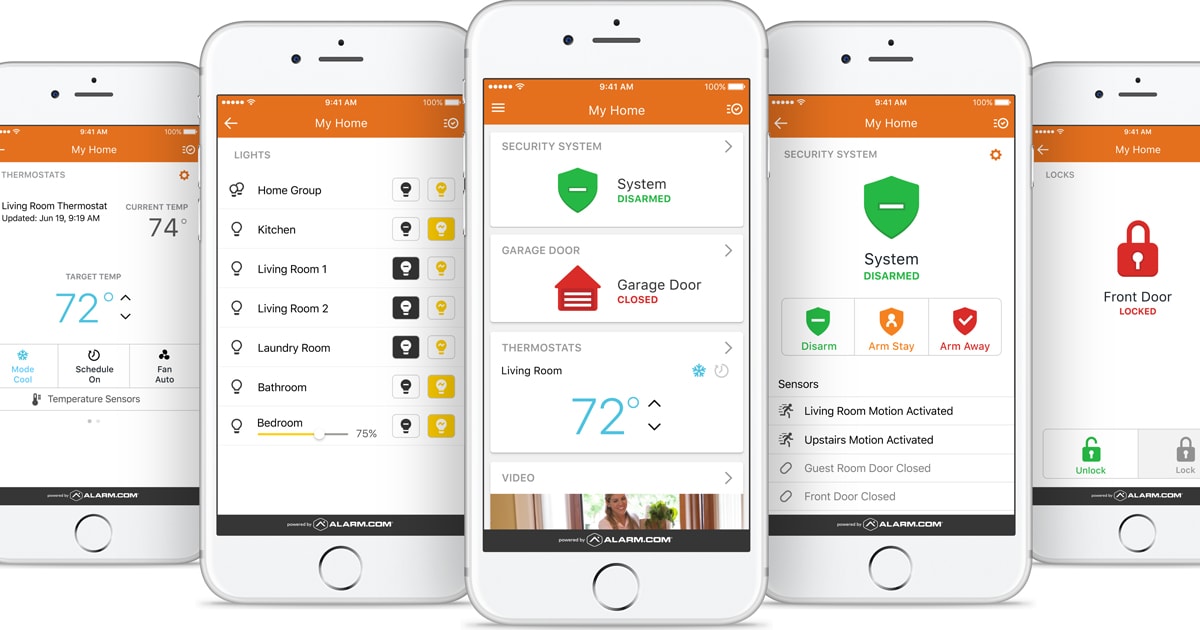
How Does Alarm.com Work? Alarm.com is a cloud-based service that allows customers to manage their security alarms and home automation systems remotely. Alarm.com does not manufacture security components, like alarm panels and cameras. Instead, its cutting-edge software is integrated into hardware systems provided by highly regarded manufacturers. What sets Alarm.com apart? Alarm.com Products Alarm.com’s partnership…